Showing posts with label fairy tales. Show all posts

Monday, 21 January 2013

The Little Mermaid by Hans Christian Andersen :part 2


 Part 1 
In the late evening clouds filled the sky. Thunder cracked and lightning darted across the heavens. Black waves lifted those great bergs of ice on high, where they flashed when the lightning struck.

On all the ships the sails were reefed and there was fear and trembling. But quietly she sat there, upon her drifting iceberg, and watched the blue forked lightning strike the sea.

Each of the sisters took delight in the lovely new sights when she first rose up to the surface of the sea. But when they became grown-up girls, who were allowed to go wherever they liked, they became indifferent to it. They would become homesick, and in a month they said that there was no place like the bottom of the sea, where they felt so completely at home.

On many an evening the older sisters would rise to the surface, arm in arm, all five in a row. They had beautiful voices, more charming than those of any mortal beings. When a storm was brewing, and they anticipated a shipwreck, they would swim before the ship and sing most seductively of how beautiful it was at the bottom of the ocean, trying to overcome the prejudice that the sailors had against coming down to them. But people could not understand their song, and mistook it for the voice of the storm. Nor was it for them to see the glories of the deep. When their ship went down they were drowned, and it was as dead men that they reached the sea king's palace.

On the evenings when the mermaids rose through the water like this, arm in arm, their youngest sister stayed behind all alone, looking after them and wanting to weep. But a mermaid has no tears, and therefore she suffers so much more.

"Oh, how I do wish I were fifteen!" she said. "I know I shall love that world up there and all the people who live in it."

And at last she too came to be fifteen.

"Now I'll have you off my hands," said her grandmother, the old queen dowager. "Come, let me adorn you like your sisters." In the little maid's hair she put a wreath of white lilies, each petal of which was formed from half of a pearl. And the old queen let eight big oysters fasten themselves to the princess's tail, as a sign of her high rank.

"But that hurts!" said the little mermaid.

"You must put up with a good deal to keep up appearances," her grandmother told her.

Oh, how gladly she would have shaken off all these decorations, and laid aside the cumbersome wreath! The red flowers in her garden were much more becoming to her, but she didn't dare to make any changes. "Good-by," she said, and up she went through the water, as light and as sparkling as a bubble.

The sun had just gone down when her head rose above the surface, but the clouds still shone like gold and roses, and in the delicately tinted sky sparkled the clear gleam of the evening star. The air was mild and fresh and the sea unruffled. A great three-master lay in view with only one of all its sails set, for there was not even the whisper of a breeze, and the sailors idled about in the rigging and on the yards. There was music and singing on the ship, and as night came on they lighted hundreds of such brightly colored lanterns that one might have thought the flags of all nations were swinging in the air.

The little mermaid swam right up to the window of the main cabin, and each time she rose with the swell she could peep in through the clear glass panes at the crowd of brilliantly dressed people within. The handsomest of them all was a young Prince with big dark eyes. He could not be more than sixteen years old. It was his birthday and that was the reason for all the celebration. Up on deck the sailors were dancing, and when the Prince appeared among them a hundred or more rockets flew through the air, making it as bright as day. These startled the little mermaid so badly that she ducked under the water. But she soon peeped up again, and then it seemed as if all the stars in the sky were falling around her. Never had she seen such fireworks. Great suns spun around, splendid fire-fish floated through the blue air, and all these things were mirrored in the crystal clear sea. It was so brilliantly bright that you could see every little rope of the ship, and the people could be seen distinctly. Oh, how handsome the young Prince was! He laughed, and he smiled and shook people by the hand, while the music rang out in the perfect evening.

It got very late, but the little mermaid could not take her eyes off the ship and the handsome Prince. The brightly colored lanterns were put out, no more rockets flew through the air, and no more cannon boomed. But there was a mutter and rumble deep down in the sea, and the swell kept bouncing her up so high that she could look into the cabin.

Now the ship began to sail. Canvas after canvas was spread in the wind, the waves rose high, great clouds gathered, and lightning flashed in the distance. Ah, they were in for a terrible storm, and the mariners made haste to reef the sails. The tall ship pitched and rolled as it sped through the angry sea. The waves rose up like towering black mountains, as if they would break over the masthead, but the swan-like ship plunged into the valleys between such waves, and emerged to ride their lofty heights. To the little mermaid this seemed good sport, but to the sailors it was nothing of the sort. The ship creaked and labored, thick timbers gave way under the heavy blows, waves broke over the ship, the mainmast snapped in two like a reed, the ship listed over on its side, and water burst into the hold.

Now the little mermaid saw that people were in peril, and that she herself must take care to avoid the beams and wreckage tossed about by the sea. One moment it would be black as pitch, and she couldn't see a thing. Next moment the lightning would flash so brightly that she could distinguish every soul on board. Everyone was looking out for himself as best he could. She watched closely for the young Prince, and when the ship split in two she saw him sink down in the sea. At first she was overjoyed that he would be with her, but then she recalled that human people could not live under the water, and he could only visit her father's palace as a dead man. No, he should not die! So she swam in among all the floating planks and beams, completely forgetting that they might crush her. She dived through the waves and rode their crests, until at length she reached the young Prince, who was no longer able to swim in that raging sea. His arms and legs were exhausted, his beautiful eyes were closing, and he would have died if the little mermaid had not come to help him. She held his head above water, and let the waves take them wherever the waves went.

At daybreak, when the storm was over, not a trace of the ship was in view. The sun rose out of the waters, red and bright, and its beams seemed to bring the glow of life back to the cheeks of the Prince, but his eyes remained closed. The mermaid kissed his high and shapely forehead. As she stroked his wet hair in place, it seemed to her that he looked like that marble statue in her little garden. She kissed him again and hoped that he would live.

She saw dry land rise before her in high blue mountains, topped with snow as glistening white as if a flock of swans were resting there. Down by the shore were splendid green woods, and in the foreground stood a church, or perhaps a convent; she didn't know which, but anyway it was a building. Orange and lemon trees grew in its garden, and tall palm trees grew beside the gateway. Here the sea formed a little harbor, quite calm and very deep. Fine white sand had been washed up below the cliffs. She swam there with the handsome Prince, and stretched him out on the sand, taking special care to pillow his head up high in the warm sunlight.

The bells began to ring in the great white building, and a number of young girls came out into the garden. The little mermaid swam away behind some tall rocks that stuck out of the water. She covered her hair and her shoulders with foam so that no one could see her tiny face, and then she watched to see who would find the poor Prince.

In a little while one of the young girls came upon him. She seemed frightened, but only for a minute; then she called more people. The mermaid watched the Prince regain consciousness, and smile at everyone around him. But he did not smile at her, for he did not even know that she had saved him. She felt very unhappy, and when they led him away to the big building she dived sadly down into the water and returned to her father's palace.

She had always been quiet and wistful, and now she became much more so. Her sisters asked her what she had seen on her first visit up to the surface, but she would not tell them a thing.

Many evenings and many mornings she revisited the spot where she had left the Prince. She saw the fruit in the garden ripened and harvested, and she saw the snow on the high mountain melted away, but she did not see the Prince, so each time she came home sadder than she had left. It was her one consolation to sit in her little garden and throw her arms about the beautiful marble statue that looked so much like the Prince. But she took no care of her flowers now. They overgrew the paths until the place was a wilderness, and their long stalks and leaves became so entangled in the branches of the tree that it cast a gloomy shade.

Finally she couldn't bear it any longer. She told her secret to one of her sisters. Immediately all the other sisters heard about it. No one else knew, except a few more mermaids who told no one - except their most intimate friends. One of these friends knew who the Prince was. She too had seen the birthday celebration on the ship. She knew where he came from and where his kingdom was.

"Come, little sister!" said the other princesses. Arm in arm, they rose from the water in a long row, right in front of where they knew the Prince's palace stood. It was built of pale, glistening, golden stone with great marble staircases, one of which led down to the sea. Magnificent gilt domes rose above the roof, and between the pillars all around the building were marble statues that looked most lifelike. Through the clear glass of the lofty windows one could see into the splendid halls, with their costly silk hangings and tapestries, and walls covered with paintings that were delightful to behold. In the center of the main hall a large fountain played its columns of spray up to the glass-domed roof, through which the sun shone down on the water and upon the lovely plants that grew in the big basin.

Now that she knew where he lived, many an evening and many a night she spent there in the sea. She swam much closer to shore than any of her sisters would dare venture, and she even went far up a narrow stream, under the splendid marble balcony that cast its long shadow in the water. Here she used to sit and watch the young Prince when he thought himself quite alone in the bright moonlight.

On many evenings she saw him sail out in his fine boat, with music playing and flags a-flutter. She would peep out through the green rushes, and if the wind blew her long silver veil, anyone who saw it mistook it for a swan spreading its wings.

On many nights she saw the fishermen come out to sea with their torches, and heard them tell about how kind the young Prince was. This made her proud to think that it was she who had saved his life when he was buffeted about, half dead among the waves. And she thought of how softly his head had rested on her breast, and how tenderly she had kissed him, though he knew nothing of all this nor could he even dream of it.

Increasingly she grew to like human beings, and more and more she longed to live among them. Their world seemed so much wider than her own, for they could skim over the sea in ships, and mount up into the lofty peaks high over the clouds, and their lands stretched out in woods and fields farther than the eye could see. There was so much she wanted to know. Her sisters could not answer all her questions, so she asked her old grandmother, who knew about the "upper world," which was what she said was the right name for the countries above the sea.

"If men aren't drowned," the little mermaid asked, "do they live on forever? Don't they die, as we do down here in the sea?"

"Yes," the old lady said, "they too must die, and their lifetimes are even shorter than ours. We can live to be three hundred years old, but when we perish we turn into mere foam on the sea, and haven't even a grave down here among our dear ones. We have no immortal soul, no life hereafter. We are like the green seaweed - once cut down, it never grows again. Human beings, on the contrary, have a soul which lives forever, long after their bodies have turned to clay. It rises through thin air, up to the shining stars. Just as we rise through the water to see the lands on earth, so men rise up to beautiful places unknown, which we shall never see."

"Why weren't we given an immortal soul?" the little mermaid sadly asked. "I would gladly give up my three hundred years if I could be a human being only for a day, and later share in that heavenly realm."

"You must not think about that," said the old lady. "We fare much more happily and are much better off than the folk up there."

"Then I must also die and float as foam upon the sea, not hearing the music of the waves, and seeing neither the beautiful flowers nor the red sun! Can't I do anything at all to win an immortal soul?"

"No," her grandmother answered, "not unless a human being loved you so much that you meant more to him than his father and mother. If his every thought and his whole heart cleaved to you so that he would let a priest join his right hand to yours and would promise to be faithful here and throughout all eternity, then his soul would dwell in your body, and you would share in the happiness of mankind. He would give you a soul and yet keep his own. But that can never come to pass. The very thing that is your greatest beauty here in the sea - your fish tail - would be considered ugly on land. They have such poor taste that to be thought beautiful there you have to have two awkward props which they call legs."

The little mermaid sighed and looked unhappily at her fish tail.

"Come, let us be gay!" the old lady said. "Let us leap and bound throughout the three hundred years that we have to live. Surely that is time and to spare, and afterwards we shall be glad enough to rest in our graves. - We are holding a court ball this evening."

This was a much more glorious affair than is ever to be seen on earth. The walls and the ceiling of the great ballroom were made of massive but transparent glass. Many hundreds of huge rose-red and grass-green shells stood on each side in rows, with the blue flames that burned in each shell illuminating the whole room and shining through the walls so clearly that it was quite bright in the sea outside. You could see the countless fish, great and small, swimming toward the glass walls. On some of them the scales gleamed purplish-red, while others were silver and gold. Across the floor of the hall ran a wide stream of water, and upon this the mermaids and mermen danced to their own entrancing songs. Such beautiful voices are not to be heard among the people who live on land. The little mermaid sang more sweetly than anyone else, and everyone applauded her. For a moment her heart was happy, because she knew she had the loveliest voice of all, in the sea or on the land. But her thoughts soon strayed to the world up above. She could not forget the charming Prince, nor her sorrow that she did not have an immortal soul like his. Therefore she stole out of her father's palace and, while everything there was song and gladness, she sat sadly in her own little garden.

Then she heard a bugle call through the water, and she thought, "That must mean he is sailing up there, he whom I love more than my father or mother, he of whom I am always thinking, and in whose hands I would so willingly trust my lifelong happiness. I dare do anything to win him and to gain an immortal soul. While my sisters are dancing here, in my father's palace, I shall visit the sea witch of whom I have always been so afraid. Perhaps she will be able to advise me and help me."

The little mermaid set out from her garden toward the whirlpools that raged in front of the witch's dwelling. She had never gone that way before. No flowers grew there, nor any seaweed. Bare and gray, the sands extended to the whirlpools, where like roaring mill wheels the waters whirled and snatched everything within their reach down to the bottom of the sea. Between these tumultuous whirlpools she had to thread her way to reach the witch's waters, and then for a long stretch the only trail lay through a hot seething mire, which the witch called her peat marsh. Beyond it her house lay in the middle of a weird forest, where all the trees and shrubs were polyps, half animal and half plant. They looked like hundred-headed snakes growing out of the soil. All their branches were long, slimy arms, with fingers like wriggling worms. They squirmed, joint by joint, from their roots to their outermost tentacles, and whatever they could lay hold of they twined around and never let go. The little mermaid was terrified, and stopped at the edge of the forest. Her heart thumped with fear and she nearly turned back, but then she remembered the Prince and the souls that men have, and she summoned her courage. She bound her long flowing locks closely about her head so that the polyps could not catch hold of them, folded her arms across her breast, and darted through the water like a fish, in among the slimy polyps that stretched out their writhing arms and fingers to seize her. She saw that every one of them held something that it had caught with its hundreds of little tentacles, and to which it clung as with strong hoops of steel. The white bones of men who had perished at sea and sunk to these depths could be seen in the polyps' arms. Ships' rudders, and seamen's chests, and the skeletons of land animals had also fallen into their clutches, but the most ghastly sight of all was a little mermaid whom they had caught and strangled.

She reached a large muddy clearing in the forest, where big fat water snakes slithered about, showing their foul yellowish bellies. In the middle of this clearing was a house built of the bones of shipwrecked men, and there sat the sea witch, letting a toad eat out of her mouth just as we might feed sugar to a little canary bird. She called the ugly fat water snakes her little chickabiddies, and let them crawl and sprawl about on her spongy bosom.

"I know exactly what you want," said the sea witch. "It is very foolish of you, but just the same you shall have your way, for it will bring you to grief, my proud princess. You want to get rid of your fish tail and have two props instead, so that you can walk about like a human creature, and have the young Prince fall in love with you, and win him and an immortal soul besides." At this, the witch gave such a loud cackling laugh that the toad and the snakes were shaken to the ground, where they lay writhing.

"You are just in time," said the witch. "After the sun comes up tomorrow, a whole year would have to go by before I could be of any help to you. J shall compound you a draught, and before sunrise you must swim to the shore with it, seat yourself on dry land, and drink the draught down. Then your tail will divide and shrink until it becomes what the people on earth call a pair of shapely legs. But it will hurt; it will feel as if a sharp sword slashed through you. Everyone who sees you will say that you are the most graceful human being they have ever laid eyes on, for you will keep your gliding movement and no dancer will be able to tread as lightly as you. But every step you take will feel as if you were treading upon knife blades so sharp that blood must flow. I am willing to help you, but are you willing to suffer all this?"

"Yes," the little mermaid said in a trembling voice, as she thought of the Prince and of gaining a human soul.

"Remember!" said the witch. "Once you have taken a human form, you can never be a mermaid again. You can never come back through the waters to your sisters, or to your father's palace. And if you do not win the love of the Prince so completely that for your sake he forgets his father and mother, cleaves to you with his every thought and his whole heart, and lets the priest join your hands in marriage, then you will win no immortal soul. If he marries someone else, your heart will break on the very next morning, and you will become foam of the sea."

"I shall take that risk," said the little mermaid, but she turned as pale as death.

"Also, you will have to pay me," said the witch, "and it is no trifling price that I'm asking. You have the sweetest voice of anyone down here at the bottom of the sea, and while I don't doubt that you would like to captivate the Prince with it, you must give this voice to me. I will take the very best thing that you have, in return for my sovereign draught. I must pour my own blood in it to make the drink as sharp as a two-edged sword."

"But if you take my voice," said the little mermaid, "what will be left to me?"

"Your lovely form," the witch told her, "your gliding movements, and your eloquent eyes. With these you can easily enchant a human heart. Well, have you lost your courage? Stick out your little tongue and I shall cut it off. I'll have my price, and you shall have the potent draught."

"Go ahead," said the little mermaid.

The witch hung her caldron over the flames, to brew the draught. "Cleanliness is a good thing," she said, as she tied her snakes in a knot and scoured out the pot with them. Then she pricked herself in the chest and let her black blood splash into the caldron. Steam swirled up from it, in such ghastly shapes that anyone would have been terrified by them. The witch constantly threw new ingredients into the caldron, and it started to boil with a sound like that of a crocodile shedding tears. When the draught was ready at last, it looked as clear as the purest water.

"There's your draught," said the witch. And she cut off the tongue of the little mermaid, who now was dumb and could neither sing nor talk.

"If the polyps should pounce on you when you walk back through my wood," the witch said, "just spill a drop of this brew upon them and their tentacles will break in a thousand pieces." But there was no need of that, for the polyps curled up in terror as soon as they saw the bright draught. It glittered in the little mermaid's hand as if it were a shining star. So she soon traversed the forest, the marsh, and the place of raging whirlpools.

She could see her father's palace. The lights had been snuffed out in the great ballroom, and doubtless everyone in the palace was asleep, but she dared not go near them, now that she was stricken dumb and was leaving her home forever. Her heart felt as if it would break with grief. She tip-toed into the garden, took one flower from each of her sisters' little plots, blew a thousand kisses toward the palace, and then mounted up through the dark blue sea.

The sun had not yet risen when she saw the Prince's palace. As she climbed his splendid marble staircase, the moon was shining clear. The little mermaid swallowed the bitter, fiery draught, and it was as if a two-edged sword struck through her frail body. She swooned away, and lay there as if she were dead. When the sun rose over the sea she awoke and felt a flash of pain, but directly in front of her stood the handsome young Prince, gazing at her with his coal-black eyes. Lowering her gaze, she saw that her fish tail was gone, and that she had the loveliest pair of white legs any young maid could hope to have. But she was naked, so she clothed herself in her own long hair.

The Prince asked who she was, and how she came to be there. Her deep blue eyes looked at him tenderly but very sadly, for she could not speak. Then he took her hand and led her into his palace. Every footstep felt as if she were walking on the blades and points of sharp knives, just as the witch had foretold, but she gladly endured it. She moved as lightly as a bubble as she walked beside the Prince. He and all who saw her marveled at the grace of her gliding walk.

Once clad in the rich silk and muslin garments that were provided for her, she was the loveliest person in all the palace, though she was dumb and could neither sing nor speak. Beautiful slaves, attired in silk and cloth of gold, came to sing before the Prince and his royal parents. One of them sang more sweetly than all the others, and when the Prince smiled at her and clapped his hands, the little mermaid felt very unhappy, for she knew that she herself used to sing much more sweetly.

"Oh," she thought, "if he only knew that I parted with my voice forever so that I could be near him."

Graceful slaves now began to dance to the most wonderful music. Then the little mermaid lifted her shapely white arms, rose up on the tips of her toes, and skimmed over the floor. No one had ever danced so well. Each movement set off her beauty to better and better advantage, and her eyes spoke more directly to the heart than any of the singing slaves could do.

She charmed everyone, and especially the Prince, who called her his dear little foundling. She danced time and again, though every time she touched the floor she felt as if she were treading on sharp-edged steel. The Prince said he would keep her with him always, and that she was to have a velvet pillow to sleep on outside his door.

He had a page's suit made for her, so that she could go with him on horseback. They would ride through the sweet scented woods, where the green boughs brushed her shoulders, and where the little birds sang among the fluttering leaves.

She climbed up high mountains with the Prince, and though her tender feet bled so that all could see it, she only laughed and followed him on until they could see the clouds driving far below, like a flock of birds in flight to distant lands.

At home in the Prince's palace, while the others slept at night, she would go down the broad marble steps to cool her burning feet in the cold sea water, and then she would recall those who lived beneath the sea. One night her sisters came by, arm in arm, singing sadly as they breasted the waves. When she held out her hands toward them, they knew who she was, and told her how unhappy she had made them all. They came to see her every night after that, and once far, far out to sea, she saw her old grandmother, who had not been up to the surface this many a year. With her was the sea king, with his crown upon his head. They stretched out their hands to her, but they did not venture so near the land as her sisters had.

Day after day she became more dear to the Prince, who loved her as one would love a good little child, but he never thought of making her his Queen. Yet she had to be his wife or she would never have an immortal soul, and on the morning after his wedding she would turn into foam on the waves.

"Don't you love me best of all?" the little mermaid's eyes seemed to question him, when he took her in his arms and kissed her lovely forehead.

"Yes, you are most dear to me," said the Prince, "for you have the kindest heart. You love me more than anyone else does, and you look so much like a young girl I once saw but never shall find again. I was on a ship that was wrecked, and the waves cast me ashore near a holy temple, where many young girls performed the rituals. The youngest of them found me beside the sea and saved my life. Though I saw her no more than twice, she is the only person in all the world whom I could love. But you are so much like her that you almost replace the memory of her in my heart. She belongs to that holy temple, therefore it is my good fortune that I have you. We shall never part."

"Alas, he doesn't know it was I who saved his life," the little mermaid thought. "I carried him over the sea to the garden where the temple stands. I hid behind the foam and watched to see if anyone would come. I saw the pretty maid he loves better than me." A sigh was the only sign of her deep distress, for a mermaid cannot cry. "He says that the other maid belongs to the holy temple. She will never come out into the world, so they will never see each other again. It is I who will care for him, love him, and give all my life to him."

Now rumors arose that the Prince was to wed the beautiful daughter of a neighboring King, and that it was for this reason he was having such a superb ship made ready to sail. The rumor ran that the Prince's real interest in visiting the neighboring kingdom was to see the King's daughter, and that he was to travel with a lordly retinue. The little mermaid shook her head and smiled, for she knew the Prince's thoughts far better than anyone else did.

"I am forced to make this journey," he told her. "I must visit the beautiful Princess, for this is my parents' wish, but they would not have me bring her home as my bride against my own will, and I can never love her. She does not resemble the lovely maiden in the temple, as you do, and if I were to choose a bride, I would sooner choose you, my dear mute foundling with those telling eyes of yours." And he kissed her on the mouth, fingered her long hair, and laid his head against her heart so that she came to dream of mortal happiness and an immortal soul.

"I trust you aren't afraid of the sea, my silent child ' he said, as they went on board the magnificent vessel that was to carry them to the land of the neighboring King. And he told her stories of storms, of ships becalmed, of strange deep-sea fish, and of the wonders that divers have seen. She smiled at such stories, for no one knew about the bottom of the sea as well as she did.

In the clear moonlight, when everyone except the man at the helm was asleep, she sat on the side of the ship gazing down through the transparent water, and fancied she could catch glimpses of her father's palace. On the topmost tower stood her old grandmother, wearing her silver crown and looking up at the keel of the ship through the rushing waves. Then her sisters rose to the surface, looked at her sadly, and wrung their white hands. She smiled and waved, trying to let them know that all went well and that she was happy. But along came the cabin boy, and her sisters dived out of sight so quickly that the boy supposed the flash of white he had seen was merely foam on the sea.

Next morning the ship came in to the harbor of the neighboring King's glorious city. All the church bells chimed, and trumpets were sounded from all the high towers, while the soldiers lined up with flying banners and glittering bayonets. Every day had a new festivity, as one ball or levee followed another, but the Princess was still to appear. They said she was being brought up in some far-away sacred temple, where she was learning every royal virtue. But she came at last.

The little mermaid was curious to see how beautiful this Princess was, and she had to grant that a more exquisite figure she had never seen. The Princess's skin was clear and fair, and behind the long, dark lashes her deep blue eyes were smiling and devoted.

"It was you!" the Prince cried. "You are the one who saved me when I lay like a dead man beside the sea." He clasped the blushing bride of his choice in his arms. "Oh, I am happier than a man should be!" he told his little mermaid. "My fondest dream - that which I never dared to hope - has come true. You will share in my great joy, for you love me more than anyone does."

The little mermaid kissed his hand and felt that her heart was beginning to break. For the morning after his wedding day would see her dead and turned to watery foam.

All the church bells rang out, and heralds rode through the streets to announce the wedding. Upon every altar sweet-scented oils were burned in costly silver lamps. The priests swung their censers, the bride and the bridegroom joined their hands, and the bishop blessed their marriage. The little mermaid, clothed in silk and cloth of gold, held the bride's train, but she was deaf to the wedding march and blind to the holy ritual. Her thought turned on her last night upon earth, and on all she had lost in this world.

That same evening, the bride and bridegroom went aboard the ship. Cannon thundered and banners waved. On the deck of the ship a royal pavilion of purple and gold was set up, and furnished with luxurious cushions. Here the wedded couple were to sleep on that calm, clear night. The sails swelled in the breeze, and the ship glided so lightly that it scarcely seemed to move over the quiet sea. All nightfall brightly colored lanterns were lighted, and the mariners merrily danced on the deck. The little mermaid could not forget that first time she rose from the depths of the sea and looked on at such pomp and happiness. Light as a swallow pursued by his enemies, she joined in the whirling dance. Everyone cheered her, for never had she danced so wonderfully. Her tender feet felt as if they were pierced by daggers, but she did not feel it. Her heart suffered far greater pain. She knew that this was the last evening that she ever would see him for whom she had forsaken her home and family, for whom she had sacrificed her lovely voice and suffered such constant torment, while he knew nothing of all these things. It was the last night that she would breathe the same air with him, or look upon deep waters or the star fields of the blue sky. A never-ending night, without thought and without dreams, awaited her who had no soul and could not get one. The merrymaking lasted long after midnight, yet she laughed and danced on despite the thought of death she carried in her heart. The Prince kissed his beautiful bride and she toyed with his coal-black hair. Hand in hand, they went to rest in the magnificent pavilion.

A hush came over the ship. Only the helmsman remained on deck as the little mermaid leaned her white arms on the bulwarks and looked to the east to see the first red hint of daybreak, for she knew that the first flash of the sun would strike her dead. Then she saw her sisters rise up among the waves. They were as pale as she, and there was no sign of their lovely long hair that the breezes used to blow. It had all been cut off.

'We have given our hair to the witch," they said, "so that she would send you help, and save you from death tonight. She gave us a knife. Here it is. See the sharp blade! Before the sun rises, you must strike it into the Prince's heart, and when his warm blood bathes your feet they will grow together and become a fish tail. Then you will be a mermaid again, able to come back to us in the sea, and live out your three hundred years before you die and turn into dead salt sea foam. Make haste! He or you must die before sunrise. Our old grandmother is so grief-stricken that her white hair is falling fast, just as ours did under the witch's scissors. Kill the Prince and come back to us. Hurry! Hurry! See that red glow in the heavens! In a few minutes the sun will rise and you must die." So saying, they gave a strange deep sigh and sank beneath the waves.

The little mermaid parted the purple curtains of the tent and saw the beautiful bride asleep with her head on the Prince's breast. The mermaid bent down and kissed his shapely forehead. She looked at the sky, fast reddening for the break of day. She looked at the sharp knife and again turned her eyes toward the Prince, who in his sleep murmured the name of his bride. His thoughts were all for her, and the knife blade trembled in the mermaid's hand. But then she flung it from her, far out over the waves. Where it fell the waves were red, as if bubbles of blood seethed in the water. With eyes already glazing she looked once more at the Prince, hurled herself over the bulwarks into the sea, and felt her body dissolve in foam.

The sun rose up from the waters. Its beams fell, warm and kindly, upon the chill sea foam, and the little mermaid did not feel the hand of death. In the bright sunlight overhead,she saw hundreds of fair ethereal beings. They were so transparent that through them she could see the ship's white sails and the red clouds in the sky. Their voices were sheer music, but so spirit-like that no human ear could detect the sound, just as no eye on earth could see their forms. Without wings, they floated as light as the air itself. The little mermaid discovered that she was shaped like them, and that she was gradually rising up out of the foam.

'Who are you, toward whom I rise?" she asked, and her voice sounded like those above her, so spiritual that no music on earth could match it.

"We are the daughters of the air," they answered. "A mermaid has no immortal soul, and can never get one unless she wins the love of a human being. Her eternal life must depend upon a power outside herself. The daughters of the air do not have an immortal soul either, but they can earn one by their good deeds. We fly to the south, where the hot poisonous air kills human beings unless we bring cool breezes. We carry the scent of flowers through the air, bringing freshness and healing balm wherever we go. When for three hundred years we have tried to do all the good that we can, we are given an immortal soul and a share in mankind's eternal bliss. You, poor little mermaid, have tried with your whole heart to do this too. Your suffering and your loyalty have raised you up into the realm of airy spirits, and now in the course of three hundred years you may earn by your good deeds a soul that will never die."

The little mermaid lifted her clear bright eyes toward God's sun, and for the first time her eyes were wet with tears.

On board the ship all was astir and lively again. She saw the Prince and his fair bride in search of her. Then they gazed sadly into the seething foam, as if they knew she had hurled herself into the waves. Unseen by them, she kissed the bride's forehead, smiled upon the Prince, and rose up with the other daughters of the air to the rose-red clouds that sailed on high.

"This is the way that we shall rise to the kingdom of God, after three hundred years have passed."

"We may get there even sooner," one spirit whispered. "Unseen, we fly into the homes of men, where there are children, and for every day on which we find a good child who pleases his parents and deserves their love, God shortens our days of trial. The child does not know when we float through his room, but when we smile at him in approval one year is taken from our three hundred. But if we see a naughty, mischievous child we must shed tears of sorrow, and each tear adds a day to the time of our trial."

End.

The Little Mermaid by Hans Christian Andersen


"The Little Mermaid" was written and published in 1837.It was translated in many languages and the tale has been adapted to various media including musical theatre and animated film.Originally the story was written in Danish with name"Den lille havfrue" meaning "the little seawoman". The story is about a young mermaid willing to give up her life in the sea and her identity as a mermaid to gain a human soul and the love of a human prince.

The Little Mermaid by Hans Christian Andersen


Far out in the ocean the water is as blue as the petals of the loveliest cornflower, and as clear as the purest glass. But it is very deep too. It goes down deeper than any anchor rope will go, and many, many steeples would have to be stacked one on top of another to reach from the bottom to the surface of the sea. It is down there that the sea folk live.

Now don't suppose that there are only bare white sands at the bottom of the sea. No indeed! The most marvelous trees and flowers grow down there, with such pliant stalks and leaves that the least stir in the water makes them move about as though they were alive. All sorts of fish, large and small, dart among the branches, just as birds flit through the trees up here. From the deepest spot in the ocean rises the palace of the sea king. Its walls are made of coral and its high pointed windows of the clearest amber, but the roof is made of mussel shells that open and shut with the tide. This is a wonderful sight to see, for every shell holds glistening pearls, any one of which would be the pride of a queen's crown.

The sea king down there had been a widower for years, and his old mother kept house for him. She was a clever woman, but very proud of her noble birth. Therefore she flaunted twelve oysters on her tail while the other ladies of the court were only allowed to wear six. Except for this she was an altogether praiseworthy person, particularly so because she was extremely fond of her granddaughters, the little sea princesses. They were six lovely girls, but the youngest was the most beautiful of them all. Her skin was as soft and tender as a rose petal, and her eyes were as blue as the deep sea, but like all the others she had no feet. Her body ended in a fish tail.

The whole day long they used to play in the palace, down in the great halls where live flowers grew on the walls. Whenever the high amber windows were thrown open the fish would swim in, just as swallows dart into our rooms when we open the windows. But these fish, now, would swim right up to the little princesses to eat out of their hands and let themselves be petted.

Outside the palace was a big garden, with flaming red and deep-blue trees. Their fruit glittered like gold, and their blossoms flamed like fire on their constantly waving stalks. The soil was very fine sand indeed, but as blue as burning brimstone. A strange blue veil lay over everything down there. You would have thought yourself aloft in the air with only the blue sky above and beneath you, rather than down at the bottom of the sea. When there was a dead calm, you could just see the sun, like a scarlet flower with light streaming from its calyx.

Each little princess had her own small garden plot, where she could dig and plant whatever she liked. One of them made her little flower bed in the shape of a whale, another thought it neater to shape hers like a little mermaid, but the youngest of them made hers as round as the sun, and there she grew only flowers which were as red as the sun itself. She was an unusual child, quiet and wistful, and when her sisters decorated their gardens with all kinds of odd things they had found in sunken ships, she would allow nothing in hers except flowers as red as the sun, and a pretty marble statue. This figure of a handsome boy, carved in pure white marble, had sunk down to the bottom of the sea from some ship that was wrecked. Beside the statue she planted a rose-colored weeping willow tree, which thrived so well that its graceful branches shaded the statue and hung down to the blue sand, where their shadows took on a violet tint, and swayed as the branches swayed. It looked as if the roots and the tips of the branches were kissing each other in play.

Nothing gave the youngest princess such pleasure as to hear about the world of human beings up above them. Her old grandmother had to tell her all she knew about ships and cities, and of people and animals. What seemed nicest of all to her was that up on land the flowers were fragrant, for those at the bottom of the sea had no scent. And she thought it was nice that the woods were green, and that the fish you saw among their branches could sing so loud and sweet that it was delightful to hear them. Her grandmother had to call the little birds "fish," or the princess would not have known what she was talking about, for she had never seen a bird.

"When you get to be fifteen," her grandmother said, "you will be allowed to rise up out of the ocean and sit on the rocks in the moonlight, to watch the great ships sailing by. You will see woods and towns, too."

Next year one of her sisters would be fifteen, but the others - well, since each was a whole year older than the next the youngest still had five long years to wait until she could rise up from the water and see what our world was like. But each sister promised to tell the others about all that she saw, and what she found most marvelous on her first day. Their grandmother had not told them half enough, and there were so many thing that they longed to know about.

The Little Mermaid
The Little Mermaid 
The most eager of them all was the youngest, the very one who was so quiet and wistful. Many a night she stood by her open window and looked up through the dark blue water where the fish waved their fins and tails. She could just see the moon and stars. To be sure, their light was quite dim, but looked at through the water they seemed much bigger than they appear to us. Whenever a cloud-like shadow swept across them, she knew that it was either a whale swimming overhead, or a ship with many human beings aboard it. Little did they dream that a pretty young mermaid was down below, stretching her white arms up toward the keel of their ship.

The eldest princess had her fifteenth birthday, so now she received permission to rise up out of the water. When she got back she had a hundred things to tell her sisters about, but the most marvelous thing of all, she said, was to lie on a sand bar in the moonlight, when the sea was calm, and to gaze at the large city on the shore, where the lights twinkled like hundreds of stars; to listen to music; to hear the chatter and clamor of carriages and people; to see so many church towers and spires; and to hear the ringing bells. Because she could not enter the city, that was just what she most dearly longed to do.

Oh, how intently the youngest sister listened. After this, whenever she stood at her open window at night and looked up through the dark blue waters, she thought of that great city with all of its clatter and clamor, and even fancied that in these depths she could hear the church bells ring.

The next year, her second sister had permission to rise up to the surface and swim wherever she pleased. She came up just at sunset, and she said that this spectacle was the most marvelous sight she had ever seen. The heavens had a golden glow, and as for the clouds - she could not find words to describe their beauty. Splashed with red and tinted with violet, they sailed over her head. But much faster than the sailing clouds were wild swans in a flock. Like a long white veil trailing above the sea, they flew toward the setting sun. She too swam toward it, but down it went, and all the rose-colored glow faded from the sea and sky.

The following year, her third sister ascended, and as she was the boldest of them all she swam up a broad river that flowed into the ocean. She saw gloriously green, vine-colored hills. Palaces and manor houses could be glimpsed through the splendid woods. She heard all the birds sing, and the sun shone so brightly that often she had to dive under the water to cool her burning face. In a small cove she found a whole school of mortal children, paddling about in the water quite naked. She wanted to play with them, but they took fright and ran away. Then along came a little black animal - it was a dog, but she had never seen a dog before. It barked at her so ferociously that she took fright herself, and fled to the open sea. But never could she forget the splendid woods, the green hills, and the nice children who could swim in the water although they didn't wear fish tails.

The fourth sister was not so venturesome. She stayed far out among the rough waves, which she said was a marvelous place. You could see all around you for miles and miles, and the heavens up above you were like a vast dome of glass. She had seen ships, but they were so far away that they looked like sea gulls. Playful dolphins had turned somersaults, and monstrous whales had spouted water through their nostrils so that it looked as if hundreds of fountains were playing all around them.

Now the fifth sister had her turn. Her birthday came in the wintertime, so she saw things that none of the others had seen. The sea was a deep green color, and enormous icebergs drifted about. Each one glistened like a pearl, she said, but they were more lofty than any church steeple built by man. They assumed the most fantastic shapes, and sparkled like diamonds. She had seated herself on the largest one, and all the ships that came sailing by sped away as soon as the frightened sailors saw her there with her long hair blowing in the wind.

continued..

The Three Little Pigs By Joseph Jacobs


Once upon a time when pigs spoke rhyme
  And monkeys chewed tobacco,
  And hens took snuff to make them tough,
  And ducks went quack, quack, quack, O!

There was an old sow with three little pigs, and as she had not enough to keep them, she sent them out to seek their fortune. The first that went off met a man with a bundle of straw, and said to him:

“Please, man, give me that straw to build me a house.”

Which the man did, and the little pig built a house with it. Presently came along a wolf, and knocked at the door, and said:

“Little pig, little pig, let me come in.”

To which the pig answered:

“No, no, by the hair of my chiny chin chin.”

The wolf then answered to that:

“Then I’ll huff, and I’ll puff, and I’ll blow your house in.”

So he huffed, and he puffed, and he blew his house in, and ate up the little pig.

The second little pig met a man with a bundle of furze, and said:

“Please, man, give me that furze to build a house.”

Which the man did, and the pig built his house. Then along came the wolf, and said:

 Three Little Pigs
 Three Little Pigs
“Little pig, little pig, let me come in.”

“No, no, by the hair of my chiny chin chin.”

“Then I’ll puff, and I’ll huff, and I’ll blow your house in.”

So he huffed, and he puffed, and he puffed, and he huffed, and at last he blew the house down, and he ate up the little pig.

The third little pig met a man with a load of bricks, and said:

“Please, man, give me those bricks to build a house with.”

So the man gave him the bricks, and he built his house with them. So the wolf came, as he did to the other little pigs, and said:

“Little pig, little pig, let me come in.”

“No, no, by the hair of my chiny chin chin.”

“Then I’ll huff, and I’ll puff, and I’ll blow your house in.”

Well, he huffed, and he puffed, and he huffed and he puffed, and he puffed and huffed; but he could not get the house down. When he found that he could not, with all his huffing and puffing, blow the house down, he said:

“Little pig, I know where there is a nice field of turnips.”

“Where?” said the little pig.

“Oh, in Mr. Smith’s Home-field, and if you will be ready tomorrow morning I will call for you, and we will go together, and get some for dinner.”

“Very well,” said the little pig, “I will be ready. What time do you mean to go?”

“Oh, at six o’clock.”

Well, the little pig got up at five, and got the turnips before the wolf came (which he did about six) and who said:

“Little Pig, are you ready?”

The little pig said: “Ready! I have been and come back again, and got a nice potful for dinner.”

The wolf felt very angry at this, but thought that he would be up to the little pig somehow or other, so he said:

“Little pig, I know where there is a nice apple-tree.”

“Where?” said the pig.

“Down at Merry-garden,” replied the wolf, “and if you will not deceive me I will come for you, at five o’clock tomorrow and get some apples.”

Well, the little pig bustled up the next morning at four o’clock, and went off for the apples, hoping to get back before the wolf came; but he had further to go, and had to climb the tree, so that just as he was coming down from it, he saw the wolf coming, which, as you may suppose, frightened him very much. When the wolf came up he said:

“Little pig, what! are you here before me? Are they nice apples?”

“Yes, very,” said the little pig. “I will throw you down one.”

And he threw it so far, that, while the wolf was gone to pick it up, the little pig jumped down and ran home. The next day the wolf came again, and said to the little pig:

“Little pig, there is a fair at Shanklin this afternoon, will you go?”

“Oh yes,” said the pig, “I will go; what time shall you be ready?”

“At three,” said the wolf. So the little pig went off before the time as usual, and got to the fair, and bought a butter-churn, which he was going home with, when he saw the wolf coming. Then he could not tell what to do. So he got into the churn to hide, and by so doing turned it round, and it rolled down the hill with the pig in it, which frightened the wolf so much, that he ran home without going to the fair. He went to the little pig’s house, and told him how frightened he had been by a great round thing which came down the hill past him. Then the little pig said:

“Hah, I frightened you, then. I had been to the fair and bought a butter-churn, and when I saw you, I got into it, and rolled down the hill.”

Then the wolf was very angry indeed, and declared he would eat up the little pig, and that he would get down the chimney after him. When the little pig saw what he was about, he hung on the pot full of water, and made up a blazing fire, and, just as the wolf was coming down, took off the cover, and in fell the wolf; so the little pig put on the cover again in an instant, boiled him up, and ate him for supper, and lived happy ever afterwards.


End.

Monday, 17 September 2012

The Frog Prince


The Frog Prince is the famous fairy tale by Brothers Grimm.


By Brothers Grimm

One fine evening a young princess put on her bonnet and clogs, and went out to take a walk by herself in a wood; and when she came to a cool spring of water with a rose in the middle of it, she sat herself down to rest a while. Now she had a golden ball in her hand, which was her favourite plaything; and she was always tossing it up into the air, and catching it again as it fell.
     After a time she threw it up so high that she missed catching it as it fell; and the ball bounded away, and rolled along on the ground, until at last it fell down into the spring. The princess looked into the spring after her ball, but it was very deep, so deep that she could not see the bottom of it. She began to cry, and said, 'Alas! if I could only get my ball again, I would give all my fine clothes and jewels, and everything that I have in the world.'
     Whilst she was speaking, a frog put its head out of the water, and said, 'Princess, why do you weep so bitterly?'
     'Alas!' said she, 'what can you do for me, you nasty frog? My golden ball has fallen into the spring.'
     The frog said, 'I do not want your pearls, and jewels, and fine clothes; but if you will love me, and let me live with you and eat from off your golden plate, and sleep on your bed, I will bring you your ball again.'
     'What nonsense,' thought the princess, 'this silly frog is talking! He can never even get out of the spring to visit me, though he may be able to get my ball for me, and therefore I will tell him he shall have what he asks.'
     So she said to the frog, 'Well, if you will bring me my ball, I will do all you ask.'
     Then the frog put his head down, and dived deep under the water; and after a little while he came up again, with the ball in his mouth, and threw it on the edge of the spring.

The Frog Prince

     As soon as the young princess saw her ball, she ran to pick it up; and she was so overjoyed to have it in her hand again, that she never thought of the frog, but ran home with it as fast as she could.
     The frog called after her, 'Stay, princess, and take me with you as you said,'
     But she did not stop to hear a word.
     The next day, just as the princess had sat down to dinner, she heard a strange noise - tap, tap - plash, plash - as if something was coming up the marble staircase, and soon afterwards there was a gentle knock at the door, and a little voice cried out and said:

'Open the door, my princess dear,
Open the door to thy true love here!
And mind the words that thou and I said
By the fountain cool, in the greenwood shade.'
     Then the princess ran to the door and opened it, and there she saw the frog, whom she had quite forgotten. At this sight she was sadly frightened, and shutting the door as fast as she could came back to her seat.
     The king, her father, seeing that something had frightened her, asked her what was the matter.
     'There is a nasty frog,' said she, 'at the door, that lifted my ball for me out of the spring this morning. I told him that he should live with me here, thinking that he could never get out of the spring; but there he is at the door, and he wants to come in.'
     While she was speaking the frog knocked again at the door, and said:

'Open the door, my princess dear,
Open the door to thy true love here!

And mind the words that thou and I said
By the fountain cool, in the greenwood shade.'

     Then the king said to the young princess, 'As you have given your word you must keep it; so go and let him in.'
     She did so, and the frog hopped into the room, and then straight on - tap, tap - plash, plash - from the bottom of the room to the top, till he came up close to the table where the princess sat.
     'Pray lift me upon chair,' said he to the princess, 'and let me sit next to you.'
     As soon as she had done this, the frog said, 'Put your plate nearer to me, that I may eat out of it.'
     This she did, and when he had eaten as much as he could, he said, 'Now I am tired; carry me upstairs, and put me into your bed.' And the princess, though very unwilling, took him up in her hand, and put him upon the pillow of her own bed, where he slept all night long.
     As soon as it was light the frog jumped up, hopped downstairs, and went out of the house.
     'Now, then,' thought the princess, 'at last he is gone, and I shall be troubled with him no more.'
     But she was mistaken; for when night came again she heard the same tapping at the door; and the frog came once more, and said:

'Open the door, my princess dear,
Open the door to thy true love here!
And mind the words that thou and I said
By the fountain cool, in the greenwood shade.'

     And when the princess opened the door the frog came in, and slept upon her pillow as before, till the morning broke. And the third night he did the same. But when the princess awoke on the following morning she was astonished to see, instead of the frog, a handsome prince, gazing on her with the most beautiful eyes she had ever seen and standing at the head of her bed.

     He told her that he had been enchanted by a spiteful fairy, who had changed him into a frog; and that he had been fated so to abide till some princess should take him out of the spring, and let him eat from her plate, and sleep upon her bed for three nights.
     'You,' said the prince, 'have broken his cruel charm, and now I have nothing to wish for but that you should go with me into my father's kingdom, where I will marry you, and love you as long as you live.'
     The young princess, you may be sure, was not long in saying 'Yes' to all this; and as they spoke a brightly coloured coach drove up, with eight beautiful horses, decked with plumes of feathers and a golden harness; and behind the coach rode the prince's servant, faithful Heinrich, who had bewailed the misfortunes of his dear master during his enchantment so long and so bitterly, that his heart had well-nigh burst.
     They then took leave of the king, and got into the coach with eight horses, and all set out, full of joy and merriment, for the prince's kingdom, which they reached safely; and there they lived happily a great many years.

Rapunzel- stories for children

"Rapunzel" is the popular German fairy tale published in 1812 was written by Brothers Grimm.  


By Brothers Grimm
There were once a man and a woman who had long, in vain, wished for a child. At length it appeared that God was about to grant their desire.
     These people had a little window at the back of their house from which a splendid garden could be seen, which was full of the most beautiful flowers and herbs. It was, however, surrounded by a high wall, and no one dared to go into it because it belonged to an enchantress, who had great power and was dreaded by all the world.
     One day the woman was standing by this window and looking down into the garden, when she saw a bed which was planted with the most beautiful rampion, and it looked so fresh and green that she longed for it. She quite pined away, and began to look pale and miserable.
     Her husband was alarmed, and asked: 'What ails you, dear wife?'
     'Ah,' she replied, 'if I can't eat some of the rampion, which is in the garden behind our house, I shall die.'
     The man, who loved her, thought: 'Sooner than let your wife die, bring her some of the rampion yourself, let it cost what it will.'
     At twilight, he clambered down over the wall into the garden of the enchantress, hastily clutched a handful of rampion, and took it to his wife. She at once made herself a salad of it, and ate it greedily. It tasted so good to her - so very good, that the next day she longed for it three times as much as before.
     If he was to have any rest, her husband knew he must once more descend into the garden. Therefore, in the gloom of evening, he let himself down again; but when he had clambered down the wall he was terribly afraid, for he saw the enchantress standing before him.
     'How can you dare,' said she with angry look, 'descend into my garden and steal my rampion like a thief? You shall suffer for it!'

     'Ah,' answered he, 'let mercy take the place of justice, I only made up my mind to do it out of necessity. My wife saw your rampion from the window, and felt such a longing for it that she would have died if she had not got some to eat.'
     The enchantress allowed her anger to be softened, and said to him: 'If the case be as you say, I will allow you to take away with you as much rampion as you will, only I make one condition, you must give me the child which your wife will bring into the world; it shall be well treated, and I will care for it like a mother.'
     The man in his terror consented to everything.
     When the woman was brought to bed, the enchantress appeared at once, gave the child the name of Rapunzel, and took it away with her.
     Rapunzel grew into the most beautiful child under the sun. When she was twelve years old, the enchantress shut her into a tower in the middle of a forest. The tower had neither stairs nor door, but near the top was a little window. When the enchantress wanted to go in, she placed herself beneath it and cried:

'Rapunzel, Rapunzel,
Let down your hair to me.'

     Rapunzel had magnificent long hair, fine as spun gold, and when she heard the voice of the enchantress, she unfastened her braided tresses, wound them round one of the hooks of the window above, and then the hair fell twenty ells down, and the enchantress climbed up by it.
     After a year or two, it came to pass that the king's son rode through the forest and passed by the tower. Then he heard a song, which was so charming that he stood still and listened. It was Rapunzel, who in her solitude passed her time in letting her sweet voice resound. The king's son wanted to climb up to her, and looked for the door of the tower, but none was to be found. He rode home, but the singing had so deeply touched his heart, that every day he went out into the forest and listened to it.
     Once when he was thus standing behind a tree, he saw that an enchantress came there, and he heard how she cried:

'Rapunzel, Rapunzel,
Let down your hair to me.'

     Then Rapunzel let down the braids of her hair, and the enchantress climbed up to her.
Rapunzel
Rapunzel
     'If that is the ladder by which one mounts, I too will try my fortune,' said he, and the next day when it began to grow dark, he went to the tower and cried:

'Rapunzel, Rapunzel,
Let down your hair to me.'

     Immediately the hair fell down and the king's son climbed up.
     At first Rapunzel was terribly frightened when a man, such as her eyes had never yet beheld, came to her; but the king's son began to talk to her quite like a friend, and told her that his heart had been so stirred that it had let him have no rest, and he had been forced to see her. Then Rapunzel lost her fear, and when he asked her if she would take him for her husband, and she saw that he was young and handsome, she thought: 'He will love me more than old Dame Gothel does'; and she said yes, and laid her hand in his.
     She said: 'I will willingly go away with you, but I do not know how to get down. Bring with you a skein of silk every time that you come, and I will weave a ladder with it, and when that is ready I will descend, and you will take me on your horse.'
     They agreed that until that time he should come to her every evening, for the old woman came by day. The enchantress remarked nothing of this, until once Rapunzel said to her: 'Tell me, Dame Gothel, how it happens that you are so much heavier for me to draw up than the young king's son - he is with me in a moment.'

     'Ah! you wicked child,' cried the enchantress. 'What do I hear you say! I thought I had separated you from all the world, and yet you have deceived me!'
     In her anger she clutched Rapunzel's beautiful tresses, wrapped them twice round her left hand, seized a pair of scissors with the right, and snip, snap, they were cut off, and the lovely braids lay on the ground. And she was so pitiless that she took poor Rapunzel into a desert where she had to live in great grief and misery.
     On the same day that she cast out Rapunzel, however, the enchantress fastened the braids of hair, which she had cut off, to the hook of the window, and when the king's son came and cried:

'Rapunzel, Rapunzel,
Let down your hair to me.'

     she let the hair down. The king's son ascended, but instead of finding his dearest Rapunzel, he found the enchantress, who gazed at him with wicked and venomous looks.
     'Aha!' she cried mockingly, 'you would fetch your dearest, but the beautiful bird sits no longer singing in the nest; the cat has got it, and will scratch out your eyes as well. Rapunzel is lost to you; you will never see her again.'
     The king's son was beside himself with pain, and in his despair he leapt down from the tower. He escaped with his life, but the thorns into which he fell pierced his eyes.
     He wandered quite blind about the forest, ate nothing but roots and berries, and did naught but lament and weep over the loss of his dearest wife. Thus he roamed about in misery for some years, and at length came to the desert where Rapunzel, with the twins to which she had given birth, a boy and a girl, lived in wretchedness. He heard a voice, and it seemed so familiar to him that he went towards it, and when he approached, Rapunzel knew him and fell on his neck and wept. Two of her tears wetted his eyes and they grew clear again, and he could see with them as before. He led her to his kingdom where he was joyfully received, and they lived for a long time afterwards, happy and contented.

Tuesday, 3 May 2011

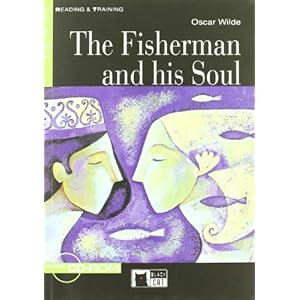
Free Read Online - The Fisherman and his Soul

The Fisherman and his Soul is the most popular fairy tale written by Oscar Wilde.

Every evening the young Fisherman went out upon the sea, and threw his nets into the water.

When the wind blew from the land he caught nothing, or but little at best, for it was a bitter and black-winged wind, and rough waves rose up to meet it. But when the wind blew to the shore, the fish came in from the deep, and swam into the meshes of his nets, and he took them to the market-place and sold them.

Every evening he went out upon the sea, and one evening the net was so heavy that hardly could he draw it into the boat. And he laughed, and said to himself, 'Surely I have caught all the fish that swim, or snared some dull monster that will be a marvel to men, or some thing of horror that the great Queen will desire,' and putting forth all his strength, he tugged at the coarse ropes till, like lines of blue enamel round a vase of bronze, the long veins rose up on his arms. He tugged at the thin ropes, and nearer and nearer came the circle of flat corks, and the net rose at last to the top of the water.

But no fish at all was in it, nor any monster or thing of horror, but only a little Mermaid lying fast asleep.

Her hair was as a wet fleece of gold, and each separate hair as a thread of fine gold in a cup of glass. Her body was as white ivory, and her tail was of silver and pearl. Silver and pearl was her tail, and the green weeds of the sea coiled round it; and like sea-shells were her ears, and her lips were like sea-coral. The cold waves dashed over her cold breasts, and the salt glistened upon her eyelids.

So beautiful was she that when the young Fisherman saw her he was filled with wonder, and he put out his hand and drew the net close to him, and leaning over the side he clasped her in his arms. And when he touched her, she gave a cry like a startled sea-gull, and woke, and looked at him in terror with her mauve-amethyst eyes, and struggled that she might escape. But he held her tightly to him, and would not suffer her to depart.

And when she saw that she could in no way escape from him, she began to weep, and said, 'I pray thee let me go, for I am the only daughter of a King, and my father is aged and alone.'

But the young Fisherman answered, 'I will not let thee go save thou makest me a promise that whenever I call thee, thou wilt come and sing to me, for the fish delight to listen to the song of the Sea- folk, and so shall my nets be full.'

'Wilt thou in very truth let me go, if I promise thee this?' cried the Mermaid.

'In very truth I will let thee go,' said the young Fisherman.

So she made him the promise he desired, and sware it by the oath of the Sea-folk. And he loosened his arms from about her, and she sank down into the water, trembling with a strange fear.

The Fisherman and his Soul
Every evening the young Fisherman went out upon the sea, and called to the Mermaid, and she rose out of the water and sang to him. Round and round her swam the dolphins, and the wild gulls wheeled above her head.

And she sang a marvellous song. For she sang of the Sea-folk who drive their flocks from cave to cave, and carry the little calves on their shoulders; of the Tritons who have long green beards, and hairy breasts, and blow through twisted conchs when the King passes by; of the palace of the King which is all of amber, with a roof of clear emerald, and a pavement of bright pearl; and of the gardens of the sea where the great filigrane fans of coral wave all day long, and the fish dart about like silver birds, and the anemones cling to the rocks, and the pinks bourgeon in the ribbed yellow sand. She sang of the big whales that come down from the north seas and have sharp icicles hanging to their fins; of the Sirens who tell of such wonderful things that the merchants have to stop their ears with wax lest they should hear them, and leap into the water and be drowned; of the sunken galleys with their tall masts, and the frozen sailors clinging to the rigging, and the mackerel swimming in and out of the open portholes; of the little barnacles who are great travellers, and cling to the keels of the ships and go round and round the world; and of the cuttlefish who live in the sides of the cliffs and stretch out their long black arms, and can make night come when they will it. She sang of the nautilus who has a boat of her own that is carved out of an opal and steered with a silken sail; of the happy Mermen who play upon harps and can charm the great Kraken to sleep; of the little children who catch hold of the slippery porpoises and ride laughing upon their backs; of the Mermaids who lie in the white foam and hold out their arms to the mariners; and of the sea-lions with their curved tusks, and the sea-horses with their floating manes.

And as she sang, all the tunny-fish came in from the deep to listen to her, and the young Fisherman threw his nets round them and caught them, and others he took with a spear. And when his boat was well-laden, the Mermaid would sink down into the sea, smiling at him.

Yet would she never come near him that he might touch her. Oftentimes he called to her and prayed of her, but she would not; and when he sought to seize her she dived into the water as a seal might dive, nor did he see her again that day. And each day the sound of her voice became sweeter to his ears. So sweet was her voice that he forgot his nets and his cunning, and had no care of his craft. Vermilion-finned and with eyes of bossy gold, the tunnies went by in shoals, but he heeded them not. His spear lay by his side unused, and his baskets of plaited osier were empty. With lips parted, and eyes dim with wonder, he sat idle in his boat and listened, listening till the sea-mists crept round him, and the wandering moon stained his brown limbs with silver.

And one evening he called to her, and said: 'Little Mermaid, little Mermaid, I love thee. Take me for thy bridegroom, for I love thee.'

But the Mermaid shook her head. 'Thou hast a human soul,' she answered. 'If only thou wouldst send away thy soul, then could I love thee.'

And the young Fisherman said to himself, 'Of what use is my soul to me? I cannot see it. I may not touch it. I do not know it. Surely I will send it away from me, and much gladness shall be mine.' And a cry of joy broke from his lips, and standing up in the painted boat, he held out his arms to the Mermaid. 'I will send my soul away,' he cried, 'and you shall be my bride, and I will be thy bridegroom, and in the depth of the sea we will dwell together, and all that thou hast sung of thou shalt show me, and all that thou desirest I will do, nor shall our lives be divided.'

And the little Mermaid laughed for pleasure and hid her face in her hands.

'But how shall I send my soul from me?' cried the young Fisherman. 'Tell me how I may do it, and lo! it shall be done.'

'Alas! I know not,' said the little Mermaid: 'the Sea-folk have no souls.' And she sank down into the deep, looking wistfully at him.

Now early on the next morning, before the sun was the span of a man's hand above the hill, the young Fisherman went to the house of the Priest and knocked three times at the door.

The novice looked out through the wicket, and when he saw who it was, he drew back the latch and said to him, 'Enter.'

And the young Fisherman passed in, and knelt down on the sweet- smelling rushes of the floor, and cried to the Priest who was reading out of the Holy Book and said to him, 'Father, I am in love with one of the Sea-folk, and my soul hindereth me from having my desire. Tell me how I can send my soul away from me, for in truth I have no need of it. Of what value is my soul to me? I cannot see it. I may not touch it. I do not know it.'

And the Priest beat his breast, and answered, 'Alack, alack, thou art mad, or hast eaten of some poisonous herb, for the soul is the noblest part of man, and was given to us by God that we should nobly use it. There is no thing more precious than a human soul, nor any earthly thing that can be weighed with it. It is worth all the gold that is in the world, and is more precious than the rubies of the kings. Therefore, my son, think not any more of this matter, for it is a sin that may not be forgiven. And as for the Sea-folk, they are lost, and they who would traffic with them are lost also. They are as the beasts of the field that know not good from evil, and for them the Lord has not died.'

The young Fisherman's eyes filled with tears when he heard the bitter words of the Priest, and he rose up from his knees and said to him, 'Father, the Fauns live in the forest and are glad, and on the rocks sit the Mermen with their harps of red gold. Let me be as they are, I beseech thee, for their days are as the days of flowers. And as for my soul, what doth my soul profit me, if it stand between me and the thing that I love?'

'The love of the body is vile,' cried the Priest, knitting his brows, 'and vile and evil are the pagan things God suffers to wander through His world. Accursed be the Fauns of the woodland, and accursed be the singers of the sea! I have heard them at night-time, and they have sought to lure me from my beads. They tap at the window, and laugh. They whisper into my ears the tale of their perilous joys. They tempt me with temptations, and when I would pray they make mouths at me. They are lost, I tell thee, they are lost. For them there is no heaven nor hell, and in neither shall they praise God's name.'

'Father,' cried the young Fisherman, 'thou knowest not what thou sayest. Once in my net I snared the daughter of a King. She is fairer than the morning star, and whiter than the moon. For her body I would give my soul, and for her love I would surrender heaven. Tell me what I ask of thee, and let me go in peace.'

'Away! Away!' cried the Priest: 'thy leman is lost, and thou shalt be lost with her.'

And he gave him no blessing, but drove him from his door.

And the young Fisherman went down into the market-place, and he walked slowly, and with bowed head, as one who is in sorrow.

And when the merchants saw him coming, they began to whisper to each other, and one of them came forth to meet him, and called him by name, and said to him, 'What hast thou to sell?'

'I will sell thee my soul,' he answered. 'I pray thee buy it of me, for I am weary of it. Of what use is my soul to me? I cannot see it. I may not touch it. I do not know it.'

But the merchants mocked at him, and said, 'Of what use is a man's soul to us? It is not worth a clipped piece of silver. Sell us thy body for a slave, and we will clothe thee in sea-purple, and put a ring upon thy finger, and make thee the minion of the great Queen. But talk not of the soul, for to us it is nought, nor has it any value for our service.'

And the young Fisherman said to himself: 'How strange a thing this is! The Priest telleth me that the soul is worth all the gold in the world, and the merchants say that it is not worth a clipped piece of silver.' And he passed out of the market-place, and went down to the shore of the sea, and began to ponder on what he should do.

And at noon he remembered how one of his companions, who was a gatherer of samphire, had told him of a certain young Witch who dwelt in a cave at the head of the bay and was very cunning in her witcheries. And he set to and ran, so eager was he to get rid of his soul, and a cloud of dust followed him as he sped round the sand of the shore. By the itching of her palm the young Witch knew his coming, and she laughed and let down her red hair. With her red hair falling around her, she stood at the opening of the cave, and in her hand she had a spray of wild hemlock that was blossoming.

'What d'ye lack? What d'ye lack?' she cried, as he came panting up the steep, and bent down before her. 'Fish for thy net, when the wind is foul? I have a little reed-pipe, and when I blow on it the mullet come sailing into the bay. But it has a price, pretty boy, it has a price. What d'ye lack? What d'ye lack? A storm to wreck the ships, and wash the chests of rich treasure ashore? I have more storms than the wind has, for I serve one who is stronger than the wind, and with a sieve and a pail of water I can send the great galleys to the bottom of the sea. But I have a price, pretty boy, I have a price. What d'ye lack? What d'ye lack? I know a flower that grows in the valley, none knows it but I. It has purple leaves, and a star in its heart, and its juice is as white as milk. Shouldst thou touch with this flower the hard lips of the Queen, she would follow thee all over the world. Out of the bed of the King she would rise, and over the whole world she would follow thee. And it has a price, pretty boy, it has a price. What d'ye lack? What d'ye lack? I can pound a toad in a mortar, and make broth of it, and stir the broth with a dead man's hand. Sprinkle it on thine enemy while he sleeps, and he will turn into a black viper, and his own mother will slay him. With a wheel I can draw the Moon from heaven, and in a crystal I can show thee Death. What d'ye lack? What d'ye lack? Tell me thy desire, and I will give it thee, and thou shalt pay me a price, pretty boy, thou shalt pay me a price.'

'My desire is but for a little thing,' said the young Fisherman, 'yet hath the Priest been wroth with me, and driven me forth. It is but for a little thing, and the merchants have mocked at me, and denied me. Therefore am I come to thee, though men call thee evil, and whatever be thy price I shall pay it.'

'What wouldst thou?' asked the Witch, coming near to him.

'I would send my soul away from me,' answered the young Fisherman.

The Witch grew pale, and shuddered, and hid her face in her blue mantle. 'Pretty boy, pretty boy,' she muttered, 'that is a terrible thing to do.'

He tossed his brown curls and laughed. 'My soul is nought to me,' he answered. 'I cannot see it. I may not touch it. I do not know it.'

'What wilt thou give me if I tell thee?' asked the Witch, looking down at him with her beautiful eyes.

'Five pieces of gold,' he said, 'and my nets, and the wattled house where I live, and the painted boat in which I sail. Only tell me how to get rid of my soul, and I will give thee all that I possess.'

She laughed mockingly at him, and struck him with the spray of hemlock. 'I can turn the autumn leaves into gold,' she answered, 'and I can weave the pale moonbeams into silver if I will it. He whom I serve is richer than all the kings of this world, and has their dominions.'

'What then shall I give thee,' he cried, 'if thy price be neither gold nor silver?'

The Witch stroked his hair with her thin white hand. 'Thou must dance with me, pretty boy,' she murmured, and she smiled at him as she spoke.

'Nought but that?' cried the young Fisherman in wonder and he rose to his feet.

'Nought but that,' she answered, and she smiled at him again.

'Then at sunset in some secret place we shall dance together,' he said, 'and after that we have danced thou shalt tell me the thing which I desire to know.'

She shook her head. 'When the moon is full, when the moon is full,' she muttered. Then she peered all round, and listened. A blue bird rose screaming from its nest and circled over the dunes, and three spotted birds rustled through the coarse grey grass and whistled to each other. There was no other sound save the sound of a wave fretting the smooth pebbles below. So she reached out her hand, and drew him near to her and put her dry lips close to his ear.

'To-night thou must come to the top of the mountain,' she whispered. 'It is a Sabbath, and He will be there.'

The young Fisherman started and looked at her, and she showed her white teeth and laughed. 'Who is He of whom thou speakest?' he asked.

'It matters not,' she answered. 'Go thou to-night, and stand under the branches of the hornbeam, and wait for my coming. If a black dog run towards thee, strike it with a rod of willow, and it will go away. If an owl speak to thee, make it no answer. When the moon is full I shall be with thee, and we will dance together on the grass.'

'But wilt thou swear to me to tell me how I may send my soul from me?' he made question.

She moved out into the sunlight, and through her red hair rippled the wind. 'By the hoofs of the goat I swear it,' she made answer.

'Thou art the best of the witches,' cried the young Fisherman, 'and I will surely dance with thee to-night on the top of the mountain. I would indeed that thou hadst asked of me either gold or silver. But such as thy price is thou shalt have it, for it is but a little thing.' And he doffed his cap to her, and bent his head low, and ran back to the town filled with a great joy.

And the Witch watched him as he went, and when he had passed from her sight she entered her cave, and having taken a mirror from a box of carved cedarwood, she set it up on a frame, and burned vervain on lighted charcoal before it, and peered through the coils of the smoke. And after a time she clenched her hands in anger. 'He should have been mine,' she muttered, 'I am as fair as she is.'

And that evening, when the moon had risen, the young Fisherman climbed up to the top of the mountain, and stood under the branches of the hornbeam. Like a targe of polished metal the round sea lay at his feet, and the shadows of the fishing-boats moved in the little bay. A great owl, with yellow sulphurous eyes, called to him by his name, but he made it no answer. A black dog ran towards him and snarled. He struck it with a rod of willow, and it went away whining.

At midnight the witches came flying through the air like bats. 'Phew!' they cried, as they lit upon the ground, 'there is some one here we know not!' and they sniffed about, and chattered to each other, and made signs. Last of all came the young Witch, with her red hair streaming in the wind. She wore a dress of gold tissue embroidered with peacocks' eyes, and a little cap of green velvet was on her head.

'Where is he, where is he?' shrieked the witches when they saw her, but she only laughed, and ran to the hornbeam, and taking the Fisherman by the hand she led him out into the moonlight and began to dance.

Round and round they whirled, and the young Witch jumped so high that he could see the scarlet heels of her shoes. Then right across the dancers came the sound of the galloping of a horse, but no horse was to be seen, and he felt afraid.

'Faster,' cried the Witch, and she threw her arms about his neck, and her breath was hot upon his face. 'Faster, faster!' she cried, and the earth seemed to spin beneath his feet, and his brain grew troubled, and a great terror fell on him, as of some evil thing that was watching him, and at last he became aware that under the shadow of a rock there was a figure that had not been there before.

It was a man dressed in a suit of black velvet, cut in the Spanish fashion. His face was strangely pale, but his lips were like a proud red flower. He seemed weary, and was leaning back toying in a listless manner with the pommel of his dagger. On the grass beside him lay a plumed hat, and a pair of riding-gloves gauntleted with gilt lace, and sewn with seed-pearls wrought into a curious device. A short cloak lined with sables hang from his shoulder, and his delicate white hands were gemmed with rings. Heavy eyelids drooped over his eyes.

The young Fisherman watched him, as one snared in a spell. At last their eyes met, and wherever he danced it seemed to him that the eyes of the man were upon him. He heard the Witch laugh, and caught her by the waist, and whirled her madly round and round.

Suddenly a dog bayed in the wood, and the dancers stopped, and going up two by two, knelt down, and kissed the man's hands. As they did so, a little smile touched his proud lips, as a bird's wing touches the water and makes it laugh. But there was disdain in it. He kept looking at the young Fisherman.

'Come! let us worship,' whispered the Witch, and she led him up, and a great desire to do as she besought him seized on him, and he followed her. But when he came close, and without knowing why he did it, he made on his breast the sign of the Cross, and called upon the holy name.

No sooner had he done so than the witches screamed like hawks and flew away, and the pallid face that had been watching him twitched with a spasm of pain. The man went over to a little wood, and whistled. A jennet with silver trappings came running to meet him. As he leapt upon the saddle he turned round, and looked at the young Fisherman sadly.

And the Witch with the red hair tried to fly away also, but the Fisherman caught her by her wrists, and held her fast.

'Loose me,' she cried, 'and let me go. For thou hast named what should not be named, and shown the sign that may not be looked at.'

'Nay,' he answered, 'but I will not let thee go till thou hast told me the secret.'

'What secret?' said the Witch, wrestling with him like a wild cat, and biting her foam-flecked lips.

'Thou knowest,' he made answer.

Her grass-green eyes grew dim with tears, and she said to the Fisherman, 'Ask me anything but that!'

He laughed, and held her all the more tightly.

And when she saw that she could not free herself, she whispered to him, 'Surely I am as fair as the daughters of the sea, and as comely as those that dwell in the blue waters,' and she fawned on him and put her face close to his.

But he thrust her back frowning, and said to her, 'If thou keepest not the promise that thou madest to me I will slay thee for a false witch.'

She grew grey as a blossom of the Judas tree, and shuddered. 'Be it so,' she muttered. 'It is thy soul and not mine. Do with it as thou wilt.' And she took from her girdle a little knife that had a handle of green viper's skin, and gave it to him.

'What shall this serve me?' he asked of her, wondering.

She was silent for a few moments, and a look of terror came over her face. Then she brushed her hair back from her forehead, and smiling strangely she said to him, 'What men call the shadow of the body is not the shadow of the body, but is the body of the soul. Stand on the sea-shore with thy back to the moon, and cut away from around thy feet thy shadow, which is thy soul's body, and bid thy soul leave thee, and it will do so.'

The young Fisherman trembled. 'Is this true?' he murmured.

'It is true, and I would that I had not told thee of it,' she cried, and she clung to his knees weeping.

He put her from him and left her in the rank grass, and going to the edge of the mountain he placed the knife in his belt and began to climb down.

And his Soul that was within him called out to him and said, 'Lo! I have dwelt with thee for all these years, and have been thy servant. Send me not away from thee now, for what evil have I done thee?'

And the young Fisherman laughed. 'Thou hast done me no evil, but I have no need of thee,' he answered. 'The world is wide, and there is Heaven also, and Hell, and that dim twilight house that lies between. Go wherever thou wilt, but trouble me not, for my love is calling to me.'

And his Soul besought him piteously, but he heeded it not, but leapt from crag to crag, being sure-footed as a wild goat, and at last he reached the level ground and the yellow shore of the sea.

Bronze-limbed and well-knit, like a statue wrought by a Grecian, he stood on the sand with his back to the moon, and out of the foam came white arms that beckoned to him, and out of the waves rose dim forms that did him homage. Before him lay his shadow, which was the body of his soul, and behind him hung the moon in the honey- coloured air.

And his Soul said to him, 'If indeed thou must drive me from thee, send me not forth without a heart. The world is cruel, give me thy heart to take with me.'

He tossed his head and smiled. 'With what should I love my love if I gave thee my heart?' he cried.

'Nay, but be merciful,' said his Soul: 'give me thy heart, for the world is very cruel, and I am afraid.'

'My heart is my love's,' he answered, 'therefore tarry not, but get thee gone.'

'Should I not love also?' asked his Soul.

'Get thee gone, for I have no need of thee,' cried the young Fisherman, and he took the little knife with its handle of green viper's skin, and cut away his shadow from around his feet, and it rose up and stood before him, and looked at him, and it was even as himself.

He crept back, and thrust the knife into his belt, and a feeling of awe came over him. 'Get thee gone,' he murmured, 'and let me see thy face no more.'

'Nay, but we must meet again,' said the Soul. Its voice was low and flute-like, and its lips hardly moved while it spake.

'How shall we meet?' cried the young Fisherman. 'Thou wilt not follow me into the depths of the sea?'

'Once every year I will come to this place, and call to thee,' said the Soul. 'It may be that thou wilt have need of me.'

'What need should I have of thee?' cried the young Fisherman, 'but be it as thou wilt,' and he plunged into the waters and the Tritons blew their horns and the little Mermaid rose up to meet him, and put her arms around his neck and kissed him on the mouth.

And the Soul stood on the lonely beach and watched them. And when they had sunk down into the sea, it went weeping away over the marshes.

And after a year was over the Soul came down to the shore of the sea and called to the young Fisherman, and he rose out of the deep, and said, 'Why dost thou call to me?'

And the Soul answered, 'Come nearer, that I may speak with thee, for I have seen marvellous things.'

So he came nearer, and couched in the shallow water, and leaned his head upon his hand and listened.

And the Soul said to him, 'When I left thee I turned my face to the East and journeyed. From the East cometh everything that is wise. Six days I journeyed, and on the morning of the seventh day I came to a hill that is in the country of the Tartars. I sat down under the shade of a tamarisk tree to shelter myself from the sun. The land was dry and burnt up with the heat. The people went to and fro over the plain like flies crawling upon a disk of polished copper.

'When it was noon a cloud of red dust rose up from the flat rim of the land. When the Tartars saw it, they strung their painted bows, and having leapt upon their little horses they galloped to meet it. The women fled screaming to the waggons, and hid themselves behind the felt curtains.

'At twilight the Tartars returned, but five of them were missing, and of those that came back not a few had been wounded. They harnessed their horses to the waggons and drove hastily away. Three jackals came out of a cave and peered after them. Then they sniffed up the air with their nostrils, and trotted off in the opposite direction.

'When the moon rose I saw a camp-fire burning on the plain, and went towards it. A company of merchants were seated round it on carpets. Their camels were picketed behind them, and the negroes who were their servants were pitching tents of tanned skin upon the sand, and making a high wall of the prickly pear.

'As I came near them, the chief of the merchants rose up and drew his sword, and asked me my business.

'I answered that I was a Prince in my own land, and that I had escaped from the Tartars, who had sought to make me their slave. The chief smiled, and showed me five heads fixed upon long reeds of bamboo.

'Then he asked me who was the prophet of God, and I answered him Mohammed.

'When he heard the name of the false prophet, he bowed and took me by the hand, and placed me by his side. A negro brought me some mare's milk in a wooden dish, and a piece of lamb's flesh roasted.

'At daybreak we started on our journey. I rode on a red-haired camel by the side of the chief, and a runner ran before us carrying a spear. The men of war were on either hand, and the mules followed with the merchandise. There were forty camels in the caravan, and the mules were twice forty in number.

'We went from the country of the Tartars into the country of those who curse the Moon. We saw the Gryphons guarding their gold on the white rocks, and the scaled Dragons sleeping in their caves. As we passed over the mountains we held our breath lest the snows might fall on us, and each man tied a veil of gauze before his eyes. As we passed through the valleys the Pygmies shot arrows at us from the hollows of the trees, and at night-time we heard the wild men beating on their drums. When we came to the Tower of Apes we set fruits before them, and they did not harm us. When we came to the Tower of Serpents we gave them warm milk in howls of brass, and they let us go by. Three times in our journey we came to the banks of the Oxus. We crossed it on rafts of wood with great bladders of blown hide. The river-horses raged against us and sought to slay us. When the camels saw them they trembled.

'The kings of each city levied tolls on us, but would not suffer us to enter their gates. They threw us bread over the walls, little maize-cakes baked in honey and cakes of fine flour filled with dates. For every hundred baskets we gave them a bead of amber.

'When the dwellers in the villages saw us coming, they poisoned the wells and fled to the hill-summits. We fought with the Magadae who are born old, and grow younger and younger every year, and die when they are little children; and with the Laktroi who say that they are the sons of tigers, and paint themselves yellow and black; and with the Aurantes who bury their dead on the tops of trees, and themselves live in dark caverns lest the Sun, who is their god, should slay them; and with the Krimnians who worship a crocodile, and give it earrings of green glass, and feed it with butter and fresh fowls; and with the Agazonbae, who are dog-faced; and with the Sibans, who have horses' feet, and run more swiftly than horses. A third of our company died in battle, and a third died of want. The rest murmured against me, and said that I had brought them an evil fortune. I took a horned adder from beneath a stone and let it sting me. When they saw that I did not sicken they grew afraid.

'In the fourth month we reached the city of Illel. It was night- time when we came to the grove that is outside the walls, and the air was sultry, for the Moon was travelling in Scorpion. We took the ripe pomegranates from the trees, and brake them, and drank their sweet juices. Then we lay down on our carpets, and waited for the dawn.

'And at dawn we rose and knocked at the gate of the city. It was wrought out of red bronze, and carved with sea-dragons and dragons that have wings. The guards looked down from the battlements and asked us our business. The interpreter of the caravan answered that we had come from the island of Syria with much merchandise. They took hostages, and told us that they would open the gate to us at noon, and bade us tarry till then.

'When it was noon they opened the gate, and as we entered in the people came crowding out of the houses to look at us, and a crier went round the city crying through a shell. We stood in the market-place, and the negroes uncorded the bales of figured cloths and opened the carved chests of sycamore. And when they had ended their task, the merchants set forth their strange wares, the waxed linen from Egypt and the painted linen from the country of the Ethiops, the purple sponges from Tyre and the blue hangings from Sidon, the cups of cold amber and the fine vessels of glass and the curious vessels of burnt clay. From the roof of a house a company of women watched us. One of them wore a mask of gilded leather.

'And on the first day the priests came and bartered with us, and on the second day came the nobles, and on the third day came the craftsmen and the slaves. And this is their custom with all merchants as long as they tarry in the city.

'And we tarried for a moon, and when the moon was waning, I wearied and wandered away through the streets of the city and came to the garden of its god. The priests in their yellow robes moved silently through the green trees, and on a pavement of black marble stood the rose-red house in which the god had his dwelling. Its doors were of powdered lacquer, and bulls and peacocks were wrought on them in raised and polished gold. The tilted roof was of sea- green porcelain, and the jutting eaves were festooned with little bells. When the white doves flew past, they struck the bells with their wings and made them tinkle.

'In front of the temple was a pool of clear water paved with veined onyx. I lay down beside it, and with my pale fingers I touched the broad leaves. One of the priests came towards me and stood behind me. He had sandals on his feet, one of soft serpent-skin and the other of birds' plumage. On his head was a mitre of black felt decorated with silver crescents. Seven yellows were woven into his robe, and his frizzed hair was stained with antimony.

'After a little while he spake to me, and asked me my desire.

'I told him that my desire was to see the god.

'"The god is hunting," said the priest, looking strangely at me with his small slanting eyes.

'"Tell me in what forest, and I will ride with him," I answered.

'He combed out the soft fringes of his tunic with his long pointed nails. "The god is asleep," he murmured.

'"Tell me on what couch, and I will watch by him," I answered.

'"The god is at the feast," he cried.

'"If the wine be sweet I will drink it with him, and if it be bitter I will drink it with him also," was my answer.

'He bowed his head in wonder, and, taking me by the hand, he raised me up, and led me into the temple.

'And in the first chamber I saw an idol seated on a throne of jasper bordered with great orient pearls. It was carved out of ebony, and in stature was of the stature of a man. On its forehead was a ruby, and thick oil dripped from its hair on to its thighs. Its feet were red with the blood of a newly-slain kid, and its loins girt with a copper belt that was studded with seven beryls.

'And I said to the priest, "Is this the god?" And he answered me, "This is the god."

'"Show me the god," I cried, "or I will surely slay thee." And I touched his hand, and it became withered.

'And the priest besought me, saying, "Let my lord heal his servant, and I will show him the god."

'So I breathed with my breath upon his hand, and it became whole again, and he trembled and led me into the second chamber, and I saw an idol standing on a lotus of jade hung with great emeralds. It was carved out of ivory, and in stature was twice the stature of a man. On its forehead was a chrysolite, and its breasts were smeared with myrrh and cinnamon. In one hand it held a crooked sceptre of jade, and in the other a round crystal. It ware buskins of brass, and its thick neck was circled with a circle of selenites.

'And I said to the priest, "Is this the god?"

'And he answered me, "This is the god."

'"Show me the god," I cried, "or I will surely slay thee." And I touched his eyes, and they became blind.

'And the priest besought me, saying, "Let my lord heal his servant, and I will show him the god."

'So I breathed with my breath upon his eyes, and the sight came back to them, and he trembled again, and led me into the third chamber, and lo! there was no idol in it, nor image of any kind, but only a mirror of round metal set on an altar of stone.

'And I said to the priest, "Where is the god?"

'And he answered me: "There is no god but this mirror that thou seest, for this is the Mirror of Wisdom. And it reflecteth all things that are in heaven and on earth, save only the face of him who looketh into it. This it reflecteth not, so that he who looketh into it may be wise. Many other mirrors are there, but they are mirrors of Opinion. This only is the Mirror of Wisdom. And they who possess this mirror know everything, nor is there anything hidden from them. And they who possess it not have not Wisdom. Therefore is it the god, and we worship it." And I looked into the mirror, and it was even as he had said to me.

'And I did a strange thing, but what I did matters not, for in a valley that is but a day's journey from this place have I hidden the Mirror of Wisdom. Do but suffer me to enter into thee again and be thy servant, and thou shalt be wiser than all the wise men, and Wisdom shall be thine. Suffer me to enter into thee, and none will be as wise as thou.'

But the young Fisherman laughed. 'Love is better than Wisdom,' he cried, 'and the little Mermaid loves me.'

'Nay, but there is nothing better than Wisdom,' said the Soul.

'Love is better,' answered the young Fisherman, and he plunged into the deep, and the Soul went weeping away over the marshes.

And after the second year was over, the Soul came down to the shore of the sea, and called to the young Fisherman, and he rose out of the deep and said, 'Why dost thou call to me?'

And the Soul answered, 'Come nearer, that I may speak with thee, for I have seen marvellous things.'

So he came nearer, and couched in the shallow water, and leaned his head upon his hand and listened.

And the Soul said to him, 'When I left thee, I turned my face to the South and journeyed. From the South cometh everything that is precious. Six days I journeyed along the highways that lead to the city of Ashter, along the dusty red-dyed highways by which the pilgrims are wont to go did I journey, and on the morning of the seventh day I lifted up my eyes, and lo! the city lay at my feet, for it is in a valley.

'There are nine gates to this city, and in front of each gate stands a bronze horse that neighs when the Bedouins come down from the mountains. The walls are cased with copper, and the watch- towers on the walls are roofed with brass. In every tower stands an archer with a bow in his hand. At sunrise he strikes with an arrow on a gong, and at sunset he blows through a horn of horn.

'When I sought to enter, the guards stopped me and asked of me who I was. I made answer that I was a Dervish and on my way to the city of Mecca, where there was a green veil on which the Koran was embroidered in silver letters by the hands of the angels. They were filled with wonder, and entreated me to pass in.

'Inside it is even as a bazaar. Surely thou shouldst have been with me. Across the narrow streets the gay lanterns of paper flutter like large butterflies. When the wind blows over the roofs they rise and fall as painted bubbles do. In front of their booths sit the merchants on silken carpets. They have straight black beards, and their turbans are covered with golden sequins, and long strings of amber and carved peach-stones glide through their cool fingers. Some of them sell galbanum and nard, and curious perfumes from the islands of the Indian Sea, and the thick oil of red roses, and myrrh and little nail-shaped cloves. When one stops to speak to them, they throw pinches of frankincense upon a charcoal brazier and make the air sweet. I saw a Syrian who held in his hands a thin rod like a reed. Grey threads of smoke came from it, and its odour as it burned was as the odour of the pink almond in spring. Others sell silver bracelets embossed all over with creamy blue turquoise stones, and anklets of brass wire fringed with little pearls, and tigers' claws set in gold, and the claws of that gilt cat, the leopard, set in gold also, and earrings of pierced emerald, and finger-rings of hollowed jade. From the tea-houses comes the sound of the guitar, and the opium-smokers with their white smiling faces look out at the passers-by.

'Of a truth thou shouldst have been with me. The wine-sellers elbow their way through the crowd with great black skins on their shoulders. Most of them sell the wine of Schiraz, which is as sweet as honey. They serve it in little metal cups and strew rose leaves upon it. In the market-place stand the fruitsellers, who sell all kinds of fruit: ripe figs, with their bruised purple flesh, melons, smelling of musk and yellow as topazes, citrons and rose-apples and clusters of white grapes, round red-gold oranges, and oval lemons of green gold. Once I saw an elephant go by. Its trunk was painted with vermilion and turmeric, and over its ears it had a net of crimson silk cord. It stopped opposite one of the booths and began eating the oranges, and the man only laughed. Thou canst not think how strange a people they are. When they are glad they go to the bird-sellers and buy of them a caged bird, and set it free that their joy may be greater, and when they are sad they scourge themselves with thorns that their sorrow may not grow less.

'One evening I met some negroes carrying a heavy palanquin through the bazaar. It was made of gilded bamboo, and the poles were of vermilion lacquer studded with brass peacocks. Across the windows hung thin curtains of muslin embroidered with beetles' wings and with tiny seed-pearls, and as it passed by a pale-faced Circassian looked out and smiled at me. I followed behind, and the negroes hurried their steps and scowled. But I did not care. I felt a great curiosity come over me.

'At last they stopped at a square white house. There were no windows to it, only a little door like the door of a tomb. They set down the palanquin and knocked three times with a copper hammer. An Armenian in a caftan of green leather peered through the wicket, and when he saw them he opened, and spread a carpet on the ground, and the woman stepped out. As she went in, she turned round and smiled at me again. I had never seen any one so pale.

'When the moon rose I returned to the same place and sought for the house, but it was no longer there. When I saw that, I knew who the woman was, and wherefore she had smiled at me.

'Certainly thou shouldst have been with me. On the feast of the New Moon the young Emperor came forth from his palace and went into the mosque to pray. His hair and beard were dyed with rose-leaves, and his cheeks were powdered with a fine gold dust. The palms of his feet and hands were yellow with saffron.

'At sunrise he went forth from his palace in a robe of silver, and at sunset he returned to it again in a robe of gold. The people flung themselves on the ground and hid their faces, but I would not do so. I stood by the stall of a seller of dates and waited. When the Emperor saw me, he raised his painted eyebrows and stopped. I stood quite still, and made him no obeisance. The people marvelled at my boldness, and counselled me to flee from the city. I paid no heed to them, but went and sat with the sellers of strange gods, who by reason of their craft are abominated. When I told them what I had done, each of them gave me a god and prayed me to leave them.

'That night, as I lay on a cushion in the tea-house that is in the Street of Pomegranates, the guards of the Emperor entered and led me to the palace. As I went in they closed each door behind me, and put a chain across it. Inside was a great court with an arcade running all round. The walls were of white alabaster, set here and there with blue and green tiles. The pillars were of green marble, and the pavement of a kind of peach-blossom marble. I had never seen anything like it before.

'As I passed across the court two veiled women looked down from a balcony and cursed me. The guards hastened on, and the butts of the lances rang upon the polished floor. They opened a gate of wrought ivory, and I found myself in a watered garden of seven terraces. It was planted with tulip-cups and moonflowers, and silver-studded aloes. Like a slim reed of crystal a fountain hung in the dusky air. The cypress-trees were like burnt-out torches. From one of them a nightingale was singing.

'At the end of the garden stood a little pavilion. As we approached it two eunuchs came out to meet us. Their fat bodies swayed as they walked, and they glanced curiously at me with their yellow-lidded eyes. One of them drew aside the captain of the guard, and in a low voice whispered to him. The other kept munching scented pastilles, which he took with an affected gesture out of an oval box of lilac enamel.

'After a few moments the captain of the guard dismissed the soldiers. They went back to the palace, the eunuchs following slowly behind and plucking the sweet mulberries from the trees as they passed. Once the elder of the two turned round, and smiled at me with an evil smile.

'Then the captain of the guard motioned me towards the entrance of the pavilion. I walked on without trembling, and drawing the heavy curtain aside I entered in.

'The young Emperor was stretched on a couch of dyed lion skins, and a gerfalcon perched upon his wrist. Behind him stood a brass- turbaned Nubian, naked down to the waist, and with heavy earrings in his split ears. On a table by the side of the couch lay a mighty scimitar of steel.

'When the Emperor saw me he frowned, and said to me, "What is thy name? Knowest thou not that I am Emperor of this city?" But I made him no answer.

'He pointed with his finger at the scimitar, and the Nubian seized it, and rushing forward struck at me with great violence. The blade whizzed through me, and did me no hurt. The man fell sprawling on the floor, and when he rose up his teeth chattered with terror and he hid himself behind the couch.

'The Emperor leapt to his feet, and taking a lance from a stand of arms, he threw it at me. I caught it in its flight, and brake the shaft into two pieces. He shot at me with an arrow, but I held up my hands and it stopped in mid-air. Then he drew a dagger from a belt of white leather, and stabbed the Nubian in the throat lest the slave should tell of his dishonour. The man writhed like a trampled snake, and a red foam bubbled from his lips.

'As soon as he was dead the Emperor turned to me, and when he had wiped away the bright sweat from his brow with a little napkin of purfled and purple silk, he said to me, "Art thou a prophet, that I may not harm thee, or the son of a prophet, that I can do thee no hurt? I pray thee leave my city to-night, for while thou art in it I am no longer its lord."

'And I answered him, "I will go for half of thy treasure. Give me half of thy treasure, and I will go away."

'He took me by the hand, and led me out into the garden. When the captain of the guard saw me, he wondered. When the eunuchs saw me, their knees shook and they fell upon the ground in fear.

'There is a chamber in the palace that has eight walls of red porphyry, and a brass-sealed ceiling hung with lamps. The Emperor touched one of the walls and it opened, and we passed down a corridor that was lit with many torches. In niches upon each side stood great wine-jars filled to the brim with silver pieces. When we reached the centre of the corridor the Emperor spake the word that may not be spoken, and a granite door swung back on a secret spring, and he put his hands before his face lest his eyes should be dazzled.

'Thou couldst not believe how marvellous a place it was. There were huge tortoise-shells full of pearls, and hollowed moonstones of great size piled up with red rubies. The gold was stored in coffers of elephant-hide, and the gold-dust in leather bottles. There were opals and sapphires, the former in cups of crystal, and the latter in cups of jade. Round green emeralds were ranged in order upon thin plates of ivory, and in one corner were silk bags filled, some with turquoise-stones, and others with beryls. The ivory horns were heaped with purple amethysts, and the horns of brass with chalcedonies and sards. The pillars, which were of cedar, were hung with strings of yellow lynx-stones. In the flat oval shields there were carbuncles, both wine-coloured and coloured like grass. And yet I have told thee but a tithe of what was there.

'And when the Emperor had taken away his hands from before his face he said to me: "This is my house of treasure, and half that is in it is thine, even as I promised to thee. And I will give thee camels and camel drivers, and they shall do thy bidding and take thy share of the treasure to whatever part of the world thou desirest to go. And the thing shall be done to-night, for I would not that the Sun, who is my father, should see that there is in my city a man whom I cannot slay."

'But I answered him, "The gold that is here is thine, and the silver also is thine, and thine are the precious jewels and the things of price. As for me, I have no need of these. Nor shall I take aught from thee but that little ring that thou wearest on the finger of thy hand."

'And the Emperor frowned. "It is but a ring of lead," he cried, "nor has it any value. Therefore take thy half of the treasure and go from my city."

'"Nay," I answered, "but I will take nought but that leaden ring, for I know what is written within it, and for what purpose."

'And the Emperor trembled, and besought me and said, "Take all the treasure and go from my city. The half that is mine shall be thine also."

'And I did a strange thing, but what I did matters not, for in a cave that is but a day's journey from this place have, I hidden the Ring of Riches. It is but a day's journey from this place, and it waits for thy coming. He who has this Ring is richer than all the kings of the world. Come therefore and take it, and the world's riches shall be thine.'

But the young Fisherman laughed. 'Love is better than Riches,' he cried, 'and the little Mermaid loves me.'

'Nay, but there is nothing better than Riches,' said the Soul.

'Love is better,' answered the young Fisherman, and he plunged into the deep, and the Soul went weeping away over the marshes.

And after the third year was over, the Soul came down to the shore of the sea, and called to the young Fisherman, and he rose out of the deep and said, 'Why dost thou call to me?'

And the Soul answered, 'Come nearer, that I may speak with thee, for I have seen marvellous things.'

So he came nearer, and couched in the shallow water, and leaned his head upon his hand and listened.

And the Soul said to him, 'In a city that I know of there is an inn that standeth by a river. I sat there with sailors who drank of two different-coloured wines, and ate bread made of barley, and little salt fish served in bay leaves with vinegar. And as we sat and made merry, there entered to us an old man bearing a leathern carpet and a lute that had two horns of amber. And when he had laid out the carpet on the floor, he struck with a quill on the wire strings of his lute, and a girl whose face was veiled ran in and began to dance before us. Her face was veiled with a veil of gauze, but her feet were naked. Naked were her feet, and they moved over the carpet like little white pigeons. Never have I seen anything so marvellous; and the city in which she dances is but a day's journey from this place.'

Now when the young Fisherman heard the words of his Soul, he remembered that the little Mermaid had no feet and could not dance. And a great desire came over him, and he said to himself, 'It is but a day's journey, and I can return to my love,' and he laughed, and stood up in the shallow water, and strode towards the shore.

And when he had reached the dry shore he laughed again, and held out his arms to his Soul. And his Soul gave a great cry of joy and ran to meet him, and entered into him, and the young Fisherman saw stretched before him upon the sand that shadow of the body that is the body of the Soul.

And his Soul said to him, 'Let us not tarry, but get hence at once, for the Sea-gods are jealous, and have monsters that do their bidding.'

So they made haste, and all that night they journeyed beneath the moon, and all the next day they journeyed beneath the sun, and on the evening of the day they came to a city.

And the young Fisherman said to his Soul, 'Is this the city in which she dances of whom thou didst speak to me?'

And his Soul answered him, 'It is not this city, but another. Nevertheless let us enter in.' So they entered in and passed through the streets, and as they passed through the Street of the Jewellers the young Fisherman saw a fair silver cup set forth in a booth. And his Soul said to him, 'Take that silver cup and hide it.'

So he took the cup and hid it in the fold of his tunic, and they went hurriedly out of the city.

And after that they had gone a league from the city, the young Fisherman frowned, and flung the cup away, and said to his Soul, 'Why didst thou tell me to take this cup and hide it, for it was an evil thing to do?'

But his Soul answered him, 'Be at peace, be at peace.'

And on the evening of the second day they came to a city, and the young Fisherman said to his Soul, 'Is this the city in which she dances of whom thou didst speak to me?'

And his Soul answered him, 'It is not this city, but another. Nevertheless let us enter in.' So they entered in and passed through the streets, and as they passed through the Street of the Sellers of Sandals, the young Fisherman saw a child standing by a jar of water. And his Soul said to him, 'Smite that child.' So he smote the child till it wept, and when he had done this they went hurriedly out of the city.

And after that they had gone a league from the city the young Fisherman grew wroth, and said to his Soul, 'Why didst thou tell me to smite the child, for it was an evil thing to do?'

But his Soul answered him, 'Be at peace, be at peace.'

And on the evening of the third day they came to a city, and the young Fisherman said to his Soul, 'Is this the city in which she dances of whom thou didst speak to me?'

And his Soul answered him, 'It may be that it is in this city, therefore let us enter in.'

So they entered in and passed through the streets, but nowhere could the young Fisherman find the river or the inn that stood by its side. And the people of the city looked curiously at him, and he grew afraid and said to his Soul, 'Let us go hence, for she who dances with white feet is not here.'

But his Soul answered, 'Nay, but let us tarry, for the night is dark and there will be robbers on the way.'

So he sat him down in the market-place and rested, and after a time there went by a hooded merchant who had a cloak of cloth of Tartary, and bare a lantern of pierced horn at the end of a jointed reed. And the merchant said to him, 'Why dost thou sit in the market-place, seeing that the booths are closed and the bales corded?'

And the young Fisherman answered him, 'I can find no inn in this city, nor have I any kinsman who might give me shelter.'

'Are we not all kinsmen?' said the merchant. 'And did not one God make us? Therefore come with me, for I have a guest-chamber.'

So the young Fisherman rose up and followed the merchant to his house. And when he had passed through a garden of pomegranates and entered into the house, the merchant brought him rose-water in a copper dish that he might wash his hands, and ripe melons that he might quench his thirst, and set a bowl of rice and a piece of roasted kid before him.

And after that he had finished, the merchant led him to the guest- chamber, and bade him sleep and be at rest. And the young Fisherman gave him thanks, and kissed the ring that was on his hand, and flung himself down on the carpets of dyed goat's-hair. And when he had covered himself with a covering of black lamb's- wool he fell asleep.

And three hours before dawn, and while it was still night, his Soul waked him and said to him, 'Rise up and go to the room of the merchant, even to the room in which he sleepeth, and slay him, and take from him his gold, for we have need of it.'

And the young Fisherman rose up and crept towards the room of the merchant, and over the feet of the merchant there was lying a curved sword, and the tray by the side of the merchant held nine purses of gold. And he reached out his hand and touched the sword, and when he touched it the merchant started and awoke, and leaping up seized himself the sword and cried to the young Fisherman, 'Dost thou return evil for good, and pay with the shedding of blood for the kindness that I have shown thee?'

And his Soul said to the young Fisherman, 'Strike him,' and he struck him so that he swooned and he seized then the nine purses of gold, and fled hastily through the garden of pomegranates, and set his face to the star that is the star of morning.

And when they had gone a league from the city, the young Fisherman beat his breast, and said to his Soul, 'Why didst thou bid me slay the merchant and take his gold? Surely thou art evil.'

But his Soul answered him, 'Be at peace, be at peace.'

'Nay,' cried the young Fisherman, 'I may not be at peace, for all that thou hast made me to do I hate. Thee also I hate, and I bid thee tell me wherefore thou hast wrought with me in this wise.'

And his Soul answered him, 'When thou didst send me forth into the world thou gavest me no heart, so I learned to do all these things and love them.'

'What sayest thou?' murmured the young Fisherman.

'Thou knowest,' answered his Soul, 'thou knowest it well. Hast thou forgotten that thou gavest me no heart? I trow not. And so trouble not thyself nor me, but be at peace, for there is no pain that thou shalt not give away, nor any pleasure that thou shalt not receive.'

And when the young Fisherman heard these words he trembled and said to his Soul, 'Nay, but thou art evil, and hast made me forget my love, and hast tempted me with temptations, and hast set my feet in the ways of sin.'

And his Soul answered him, 'Thou hast not forgotten that when thou didst send me forth into the world thou gavest me no heart. Come, let us go to another city, and make merry, for we have nine purses of gold.'

But the young Fisherman took the nine purses of gold, and flung them down, and trampled on them.

'Nay,' he cried, 'but I will have nought to do with thee, nor will I journey with thee anywhere, but even as I sent thee away before, so will I send thee away now, for thou hast wrought me no good.' And he turned his back to the moon, and with the little knife that had the handle of green viper's skin he strove to cut from his feet that shadow of the body which is the body of the Soul.

Yet his Soul stirred not from him, nor paid heed to his command, but said to him, 'The spell that the Witch told thee avails thee no more, for I may not leave thee, nor mayest thou drive me forth. Once in his life may a man send his Soul away, but he who receiveth back his Soul must keep it with him for ever, and this is his punishment and his reward.'

And the young Fisherman grew pale and clenched his hands and cried, 'She was a false Witch in that she told me not that.'

'Nay,' answered his Soul, 'but she was true to Him she worships, and whose servant she will be ever.'

And when the young Fisherman knew that he could no longer get rid of his Soul, and that it was an evil Soul and would abide with him always, he fell upon the ground weeping bitterly.

And when it was day the young Fisherman rose up and said to his Soul, 'I will bind my hands that I may not do thy bidding, and close my lips that I may not speak thy words, and I will return to the place where she whom I love has her dwelling. Even to the sea will I return, and to the little bay where she is wont to sing, and I will call to her and tell her the evil I have done and the evil thou hast wrought on me.'

And his Soul tempted him and said, 'Who is thy love, that thou shouldst return to her? The world has many fairer than she is. There are the dancing-girls of Samaris who dance in the manner of all kinds of birds and beasts. Their feet are painted with henna, and in their hands they have little copper bells. They laugh while they dance, and their laughter is as clear as the laughter of water. Come with me and I will show them to thee. For what is this trouble of thine about the things of sin? Is that which is pleasant to eat not made for the eater? Is there poison in that which is sweet to drink? Trouble not thyself, but come with me to another city. There is a little city hard by in which there is a garden of tulip-trees. And there dwell in this comely garden white peacocks and peacocks that have blue breasts. Their tails when they spread them to the sun are like disks of ivory and like gilt disks. And she who feeds them dances for their pleasure, and sometimes she dances on her hands and at other times she dances with her feet. Her eyes are coloured with stibium, and her nostrils are shaped like the wings of a swallow. From a hook in one of her nostrils hangs a flower that is carved out of a pearl. She laughs while she dances, and the silver rings that are about her ankles tinkle like bells of silver. And so trouble not thyself any more, but come with me to this city.'

But the young Fisherman answered not his Soul, but closed his lips with the seal of silence and with a tight cord bound his hands, and journeyed back to the place from which he had come, even to the little bay where his love had been wont to sing. And ever did his Soul tempt him by the way, but he made it no answer, nor would he do any of the wickedness that it sought to make him to do, so great was the power of the love that was within him.

And when he had reached the shore of the sea, he loosed the cord from his hands, and took the seal of silence from his lips, and called to the little Mermaid. But she came not to his call, though he called to her all day long and besought her.

And his Soul mocked him and said, 'Surely thou hast but little joy out of thy love. Thou art as one who in time of death pours water into a broken vessel. Thou givest away what thou hast, and nought is given to thee in return. It were better for thee to come with me, for I know where the Valley of Pleasure lies, and what things are wrought there.'

But the young Fisherman answered not his Soul, but in a cleft of the rock he built himself a house of wattles, and abode there for the space of a year. And every morning he called to the Mermaid, and every noon he called to her again, and at night-time he spake her name. Yet never did she rise out of the sea to meet him, nor in any place of the sea could he find her though he sought for her in the caves and in the green water, in the pools of the tide and in the wells that are at the bottom of the deep.

And ever did his Soul tempt him with evil, and whisper of terrible things. Yet did it not prevail against him, so great was the power of his love.

And after the year was over, the Soul thought within himself, 'I have tempted my master with evil, and his love is stronger than I am. I will tempt him now with good, and it may be that he will come with me.'

So he spake to the young Fisherman and said, 'I have told thee of the joy of the world, and thou hast turned a deaf ear to me. Suffer me now to tell thee of the world's pain, and it may be that thou wilt hearken. For of a truth pain is the Lord of this world, nor is there any one who escapes from its net. There be some who lack raiment, and others who lack bread. There be widows who sit in purple, and widows who sit in rags. To and fro over the fens go the lepers, and they are cruel to each other. The beggars go up and down on the highways, and their wallets are empty. Through the streets of the cities walks Famine, and the Plague sits at their gates. Come, let us go forth and mend these things, and make them not to be. Wherefore shouldst thou tarry here calling to thy love, seeing she comes not to thy call? And what is love, that thou shouldst set this high store upon it?'

But the young Fisherman answered it nought, so great was the power of his love. And every morning he called to the Mermaid, and every noon he called to her again, and at night-time he spake her name. Yet never did she rise out of the sea to meet him, nor in any place of the sea could he find her, though he sought for her in the rivers of the sea, and in the valleys that are under the waves, in the sea that the night makes purple, and in the sea that the dawn leaves grey.

And after the second year was over, the Soul said to the young Fisherman at night-time, and as he sat in the wattled house alone, 'Lo! now I have tempted thee with evil, and I have tempted thee with good, and thy love is stronger than I am. Wherefore will I tempt thee no longer, but I pray thee to suffer me to enter thy heart, that I may be one with thee even as before.'

'Surely thou mayest enter,' said the young Fisherman, 'for in the days when with no heart thou didst go through the world thou must have much suffered.'

'Alas!' cried his Soul, 'I can find no place of entrance, so compassed about with love is this heart of thine.'

'Yet I would that I could help thee,' said the young Fisherman.

And as he spake there came a great cry of mourning from the sea, even the cry that men hear when one of the Sea-folk is dead. And the young Fisherman leapt up, and left his wattled house, and ran down to the shore. And the black waves came hurrying to the shore, bearing with them a burden that was whiter than silver. White as the surf it was, and like a flower it tossed on the waves. And the surf took it from the waves, and the foam took it from the surf, and the shore received it, and lying at his feet the young Fisherman saw the body of the little Mermaid. Dead at his feet it was lying.

Weeping as one smitten with pain he flung himself down beside it, and he kissed the cold red of the mouth, and toyed with the wet amber of the hair. He flung himself down beside it on the sand, weeping as one trembling with joy, and in his brown arms he held it to his breast. Cold were the lips, yet he kissed them. Salt was the honey of the hair, yet he tasted it with a bitter joy. He kissed the closed eyelids, and the wild spray that lay upon their cups was less salt than his tears.

And to the dead thing he made confession. Into the shells of its ears he poured the harsh wine of his tale. He put the little hands round his neck, and with his fingers he touched the thin reed of the throat. Bitter, bitter was his joy, and full of strange gladness was his pain.

The black sea came nearer, and the white foam moaned like a leper. With white claws of foam the sea grabbled at the shore. From the palace of the Sea-King came the cry of mourning again, and far out upon the sea the great Tritons blew hoarsely upon their horns.

'Flee away,' said his Soul, 'for ever doth the sea come nigher, and if thou tarriest it will slay thee. Flee away, for I am afraid, seeing that thy heart is closed against me by reason of the greatness of thy love. Flee away to a place of safety. Surely thou wilt not send me without a heart into another world?'

But the young Fisherman listened not to his Soul, but called on the little Mermaid and said, 'Love is better than wisdom, and more precious than riches, and fairer than the feet of the daughters of men. The fires cannot destroy it, nor can the waters quench it. I called on thee at dawn, and thou didst not come to my call. The moon heard thy name, yet hadst thou no heed of me. For evilly had I left thee, and to my own hurt had I wandered away. Yet ever did thy love abide with me, and ever was it strong, nor did aught prevail against it, though I have looked upon evil and looked upon good. And now that thou art dead, surely I will die with thee also.'

And his Soul besought him to depart, but he would not, so great was his love. And the sea came nearer, and sought to cover him with its waves, and when he knew that the end was at hand he kissed with mad lips the cold lips of the Mermaid, and the heart that was within him brake. And as through the fulness of his love his heart did break, the Soul found an entrance and entered in, and was one with him even as before. And the sea covered the young Fisherman with its waves.

And in the morning the Priest went forth to bless the sea, for it had been troubled. And with him went the monks and the musicians, and the candle-bearers, and the swingers of censers, and a great company.

And when the Priest reached the shore he saw the young Fisherman lying drowned in the surf, and clasped in his arms was the body of the little Mermaid. And he drew back frowning, and having made the sign of the cross, he cried aloud and said, 'I will not bless the sea nor anything that is in it. Accursed be the Sea-folk, and accursed be all they who traffic with them. And as for him who for love's sake forsook God, and so lieth here with his leman slain by God's judgment, take up his body and the body of his leman, and bury them in the corner of the Field of the Fullers, and set no mark above them, nor sign of any kind, that none may know the place of their resting. For accursed were they in their lives, and accursed shall they be in their deaths also.'

And the people did as he commanded them, and in the corner of the Field of the Fullers, where no sweet herbs grew, they dug a deep pit, and laid the dead things within it.

And when the third year was over, and on a day that was a holy day, the Priest went up to the chapel, that he might show to the people the wounds of the Lord, and speak to them about the wrath of God.

And when he had robed himself with his robes, and entered in and bowed himself before the altar, he saw that the altar was covered with strange flowers that never had been seen before. Strange were they to look at, and of curious beauty, and their beauty troubled him, and their odour was sweet in his nostrils. And he felt glad, and understood not why he was glad.

And after that he had opened the tabernacle, and incensed the monstrance that was in it, and shown the fair wafer to the people, and hid it again behind the veil of veils, he began to speak to the people, desiring to speak to them of the wrath of God. But the beauty of the white flowers troubled him, and their odour was sweet in his nostrils, and there came another word into his lips, and he spake not of the wrath of God, but of the God whose name is Love. And why he so spake, he knew not.

And when he had finished his word the people wept, and the Priest went back to the sacristy, and his eyes were full of tears. And the deacons came in and began to unrobe him, and took from him the alb and the girdle, the maniple and the stole. And he stood as one in a dream.

And after that they had unrobed him, he looked at them and said, 'What are the flowers that stand on the altar, and whence do they come?'

And they answered him, 'What flowers they are we cannot tell, but they come from the corner of the Fullers' Field.' And the Priest trembled, and returned to his own house and prayed.

And in the morning, while it was still dawn, he went forth with the monks and the musicians, and the candle-bearers and the swingers of censers, and a great company, and came to the shore of the sea, and blessed the sea, and all the wild things that are in it. The Fauns also he blessed, and the little things that dance in the woodland, and the bright-eyed things that peer through the leaves. All the things in God's world he blessed, and the people were filled with joy and wonder. Yet never again in the corner of the Fullers' Field grew flowers of any kind, but the field remained barren even as before. Nor came the Sea-folk into the bay as they had been wont to do, for they went to another part of the sea.


-THE END-