Showing posts with label health. Show all posts

Tuesday, 23 April 2013

3 Amazing Benefits of Neem


Neem has many medicinal uses.It is good for skin care and for our overall health.
neem leaves


1. Chew everyday 2-3 leaves of Neem. Wash them properly before in taking them. Do not boil them. A help would be to take them with honey or jaggery. And, follow it up with a glass of water. Do not worry if you vomit in the starting days. Your body and taste buds will adapt gradually to it. And, the results are too good to ignore. Intake of neem leaves would clean your system internally, improve the body metabolism and toxins elimination process. It would clean your blood of impurities and as a result, give you a clear skin. It even helps you get rid of constipation and improves your immune system.

2. If you get hold of neem oil, it treats acne quick. Applying neem oil keeps your skin safe from any bacterial and fungal infection.


3. Dry the neem leaves well under sun and powder them. Make small pouches containing the powder and put several of these pouches in your cupboards. Your cupboards would be free of moth infestation. And, you do not have to bother with changing the pouches every day. They will work up to an year. You can replace them again after a year. You may put your favorite essential oil in the neem leaves powder to impart a pleasant fragrance to your cupboards and clothes.

Tuesday, 12 March 2013

What are teeth made of?

Our teeth is made up of four parts namely,

1.The Enamel
2.Dentine
3.Pulp
4.Cementum   

The pink fleshy part above the tooth is called gums.The teeth which we can see is called crown.
The crown of each of our tooth is covered by a hard shiny substance called enamel.It is the protective layer which protects our teeth and act as a barrier and avoids damages causing to the inside parts of our teeth.

Myth: Brushing the teeth with salt is good for teeth.
Fact:  Brushing the teeth with salt will remove the enamel from your teeth exposing it to danger of causing damage inside.

If this shiny protective enamel layer is removed,we can see another hard bone like substance "Dentine" which makes the largest part of our tooth.It protects the innermost part of the tooth, called the pulp.

The pulp consists of blood vessels that nourish the tooth by delivering oxygen and nutrients and keeps our tooth active and healthy.Our each tooth's nerve endings is also found here.


When you have very hot  or very cold items, you fall and hurt a tooth, or if you get a cavity, it's your pulp that get hurts. The nerve endings inside the pulp send messages to the brain if you eat very hot or cold.
teeth


The pulp goes all the way down into the cementum(root of the tooth), which is under the gum.It is also a hard tissue and is anchored to the jawbone.

The tooth decay will starts with the enamel with no pain. But once it reaches the dentine, it will cause toothache. Finally spreads over the pulp and gives terrible pain.


We have different types of teeth in different shapes to do different jobs.

1. INCISORS - HELPS TO BITE(front four teeth)
2.CANINES - Helps to tear the food.(next two teeth)
3.MOLARS  and PREMOLARS - Helps to crush and grind the food into small pieces.
These are the big teeth at the back of your mouth.(third 4 premolar and the last 6 molar teeth)

The last set of two molar teeth is Wisdom teeth.It is third molar teeth grown in 17- 21 years.In this age,the young ones become fully grown and wiser.So teeth grown in this age is called as wisdom teeth.

Gentle careful brushing and good diet is must to keep our teeth healthy.

Sunday, 16 September 2012

Work stress 'raises heart risk'


Having a highly demanding job, but little control over it, could be a deadly combination, UK researchers say.
They analysed 13 existing European studies covering nearly 200,000 people and found "job strain" was linked to a 23% increased risk of heart attacks and deaths from coronary heart disease.
The risk to the heart was much smaller than for smoking or not exercising, the Lancet medical journal report said.
The British Heart Foundation said how people reacted to work stress was key.
Job strain is a type of stress. The research team at University College London said working in any profession could lead to strain, but it was more common in lower skilled workers.
Doctors who have a lot of decision-making in their jobs would be less likely to have job strain than someone working on a busy factory production line.
Freedom
There has previously been conflicting evidence on the effect of job strain on the heart.
In this paper, the researchers analysed combined data from 13 studies.

At the beginning of each of the studies, people were asked whether they had excessive workloads or insufficient time to do their job as well as questions around how much freedom they had to make decisions.
They were then sorted into people with job strain or not and followed for an average of seven and a half years.
One of the researchers, Prof Mika Kivimaki, from University College London, said: "Our findings indicate that job strain is associated with a small but consistent increased risk of experiencing a first coronary heart disease event, such as a heart attack."
The researchers said eliminating job strain would prevent 3.4% of those cases, whereas there would be a 36% reduction if everyone stopped smoking.


'Unable to change'
Prof Kivimaki said the evidence of a direct effect of job strain on the heart was mixed.
He told the BBC job strain was linked to other lifestyle choices that were bad for the heart: "We know smokers with job strain are more likely to smoke a bit more, active people with job strain are more likely to become inactive and there is a link with obesity.

"If one has high stress at work you can still reduce risk by keeping a healthy lifestyle."
"This large study confirms this, but also shows that the negative effect of workplace strain is much smaller than, for example, the damage caused by smoking or lack of exercise.
"Though stresses at work may be unavoidable, how you deal with these pressures is important, and lighting up a cigarette is bad news for your heart. Eating a balanced diet, taking regular exercise and quitting smoking will more than offset any risk associated with your job."
Dr Bo Netterstrom, from Bispebjerg Hospital in Denmark, said other stresses at work such as job insecurity "are likely to be of major importance".
He said job strain was "a measure of only part of a psychosocially damaging work environment".

Tuesday, 24 April 2012

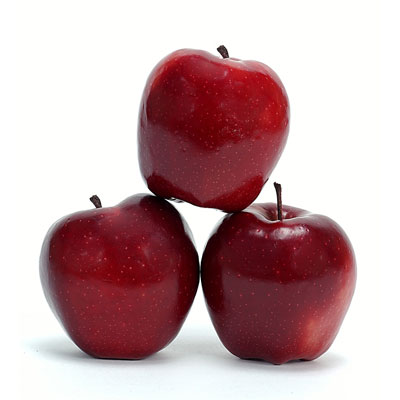
Five Reasons to Eat Organic Apples


There are good reasons to eat organic and locally raised fruits and vegetables.  For one, they usually taste better and are a whole lot fresher.  Yet most of us can’t afford to buy all our food at the farmer’s market or natural foods store, and in many places, locally produced and organic foods are a struggle to find.
So if you can only buy a few organic fruits and vegetables – which should should it be?  Which single piece of produce could have the greatest impact on agriculture, the environment and your family’s health, all at once?
The data says: apples
Reason #1: The average conventionally grown apple has more pesticide residue on it than any other fruit or vegetable.
According to the Environmental Working Group‘s analysis of USDA data, pesticides showed up on 98 percent of the more than 700 apple samples tested (yes, they were washed).  And it wasn’t just one pesticide either – apples from around the country, domestically grown and imported, were found to have up to 48 different kinds of pesticides on them.  While less than the 69 types used on cucumbers, that’s still far more than the single pesticide found in sweet corn (shucked) or the 15 on oranges (peeled).
Reason #2: We are not quite sure what some of those pesticides do to humans or the environment.
Apples are commonly sprayed with Syngenta‘s fungicide Paraquat, a pesticide under scrutiny for a possible link to Parkinson’s disease.  Additionally, apple growers in Michigan received an exemption for the last three years (and have recently applied again) for “emergency use” of the unapproved antibiotickasugamycin.  While not an antibiotic currently in use by humans, data on its affects on ground water and animal reproduction and development are not known.
Additionally, several new studies question if even allowable levels of pesticides do harm to humans, particularly organophosphates – substances the USDA reports are found on 81 percent of all conventionally grown apples.
Reason #3: Farm owners and workers like to live and work in safe environments too.
Even if the pesticide residues break down and are no longer found on the apple when you purchase it, those who spray the pesticides, and their communities, are affected by the chemicals directly.
The USDA’s 2007 Agricultural Resource Management Survey (ARMS) of organic apple producers found that most farms chose organic methods because they could increase their income.  But many also said they grew organic apples primarily to protect the health of their families and of the community, and because many wanted to adopt more environmentally friendly practices.
The problem with chemical use on farms is that someone has to apply them, and often communities nearby are hit with pesticide “drift.”  
You might also like

Friday, 16 March 2012

How to prepare Green Tea?


Please do not use milk.

Preparation of Green Tea

1. Pour boiled water into three teacups and let cool to the ideal temperature for your favorite green tea.
(Optimum brewing temperatures : Gyokuro:50-60℃ Sencha:70-90℃ Bancha, Genmaicha and Hojicha:100℃

2. Put roughly two teaspoonfuls of tea leaves into a teapot.
(Best quantity : Gyokuro: About 10g, Sencha:8g Bancha, Genmaicha, Hojicha:9g)

3. Pour the hot water from the teacups into the teapot and let the tea leaves steep until fully brewed.
(Brewing time : Gyokuro :About 2 minutes, Sencha:60seconds, Bancha, Genmaicha, Hojicha:30seconds) Pour a little bit of the brewed tea into each teacup, in turn, and repeat this process until the teapot is empty. In this way, the tea in each cup will have equal strength. 


Note:3 cups of Green Tea a day is good for health.Best time to drink green tea is between meals.Green tea impedes the absorption of iron from fruits and vegetables.So add lemon to it while drinking. 


Reference Yahoo Answers

Wednesday, 7 March 2012

How to do Surya Namaskar ?


Pose 1:
Stand with feet joined and hands folded in front of the chest (normal breathing)
Pose 2:
Raise hands and bend backward ( inhale)
Pose 3:
Bend forward and place the hands flat on the floor. You may bend knees in the beginning (exhale)
Pose 4:
Stretch the right leg back while bending the left knee & lowering the torso. Stretch the neck backwards (inhale)
Pose 5:
Lifting the hips take the left foot back to join the right foot. Lower your head. The body takes a triangular position (exhale)
Pose 6:
Lower the body to the floor. Let the chin, chest and knees rest on the floor but not the stomach. It will be very difficult until you get a body balance on your arms (hold breathing)
Pose 7:
Drop the stomach. Lift your head and raise the upper body. The abdomen should remain on the floor. Now it is the Bhujangasana Position (inhale)
Pose 8:
Lift the hips up to the triangular position of Pose 5 (exhale)
Pose 9:
Bring the left foot forward and assume pose 4 (inhale)
Pose 10:
Straighten your legs and raise hips in the Pose 3 (exhale)
Pose 11:
Raise hands above your head and bend backwards and assume pose 2 (inhale)
Pose 12:
Fold hands and bring them down to the chest, like in the starting position (exhale)
To complete one round of Surya Namaskar, one such cycle has to be done with the right foot in front and left leg stretched back.

Count 5 seconds for each step.

Thursday, 1 March 2012

Touchscreen and Germs


None of us like to think that those things that we use every day  are carriers of germs and can be contagious. 
Things that should not be shared with others if you want to reduce the risk of catching a viral illness or other infections.
Here are some common items that are better to use personally.
Panel
We often use TV remote control,keyboard but very rarely we clean it.So it may be infested with germs. Especially in cafe, hotel rooms, offices, hospitals and nursing homes,we must be very careful because there are more chances for different types of viruses and infections to happen.
Devices with touch screen
Currently there is a craze for smartphones and other devices with touch screens. Also, touch screens can be seen on ATMs in shops and other places. Although this device is very easy to handle, they are home to various infections, including E. coli, Staphylococcus aureus, and viruses that cause colds and flu. When experts have tested different types of surfaces on the germs and viruses, they found that the touch screen and keyboard were very positive.
Brushes
Combs, toothbrushes and other items can be easy to forget, if you're suddenly out of the house. You know your friends and you think that there would be nothing wrong if you use his comb? You are mistaken. With the help of a toothbrush can transmit HIV, hepatitis B and C, and the comb can detect Staphylococcus aureus and other microbes.
Mobile Phones
As is the case with remote control, mobile phones are often used, but it is rarely rub. Experts also say that the phones used by women who are infected with more microbes than those enjoyed by men.Perhaps this is due to the fact that women on average more likely to get colds than men, and they often are in contact with children, or their phones are infected with the germs of cosmetics.
Shopping carts
Recent studies have revealed that on the surface of many shopping carts can be detected, such bacteria as Salmonella, Staphylococcus and E. coli. Moreover, E. coli was found in 80 percent of store carts. You may want to carry antibacterial wipes?
Cosmetics
How nice to try new shadow and other cosmetics news, but do not do it in a store. The fact that the samples of cosmetics, taken from stores and pharmacies, have tested positive for infections such as Staphylococcus and E. coli. Moreover, the concentration of these bacteria was higher at weekends, when more buyers go to the store and tested the products.
Pens
Most people have a habit of putting a pen in their mouth, and this is an ideal way to transfer and spread of germs. Experts warn that everything from staph to the flu can be transmitted through the handle. So it is advised to clean the very often and not to put in mouth.

Love and Heart


Love rules the world. All we need is love. When we love, our health improves and we feel that our every part of the body is recharged.
How does love improves the health of our heart?
Spending time with your loved ones helps to  reduce the  blood pressure
The study published in the journal of Psychosomatic Medicine states that people who spend time with their loved ones have a a greater reduction in blood pressure than those who spend time with a stranger.
Trains your heart, when rate increases from the love
When you meet eyes with someone who is causing your increased heart rate, whether it's a new love or the love of your life, your brain secretes several hormones such as dopamine, epinephrine and norepinephrine  that make your heart beat stronger and faster.
These short bursts train your heart to make it more efficient to pump blood, just like when you exercise, but to a lesser extent. Because you should not take time off from the daily charge, even when you're in love.
Embrace good for the heart
Embrace the day, and the doctor is not required. When you have a warm hug  with your loved ones, whether it be a parent, child or your spouse, the body produces oxytocin, a hormone-good mood, which can reduce the levels of stress hormones and blood pressure.
Laughter causes the blood to flow more freely
How long have you laughed heartily? Recent studies at the University of Maryland School of Medicine, found an association between mental stress and the narrowing of blood vessels that restricts blood flow and leads to atherosclerosis. Laughter also produces the opposite effect, leading to vasodilatation.
Writing love letters lowers cholesterol
One thing is to feel love, and more - to write about love, which is also beneficial to health. So in two experiments, where college students were asked for 20 minutes to write about his love for the loved one (friend, relative or romantic partner), we observed a significant reduction in total cholesterol levels.
Positive attitude reduces the risk of heart attack
Studies show that a positive outlook on life protects against cardiovascular disease.
Scientists have identified a positive attitude, a sense of joy, happiness, delight, enthusiasm and satisfaction we feel when we are close to a loved one. The researchers found that those who had high levels of positive mood, the risk of cardiovascular disease was reduced by 22 percent.
When you hold hands, it calms the nerves
The habit of holding hands has a calming effect on the body. Thus, women who were holding the hand of their husbands during the passage of an MRI scan, felt less anxiety. The study found that even the touch of a stranger can help calm nerves, but not as much as the touch of a loved one. It is known that elevated levels of stress and anxiety associated with high blood pressure, increased heart rate and other factors contribute to heart disease.

Thursday, 9 February 2012

Benefits of Ginger


Ginger and its benefits


1.Ginger is used as a digestive aid to treat stomach upset.


2.Ginger is very effective for treating cold,cough and Pregnancy-Related Nausea and Vomiting.


3.Ginger tea helps to cure heartburn.


4.Ginger helps to get rid of morning sickness.


5.Reduces Pain and Inflammation.Ginger has anti-inflammatory properties and is a powerful natural painkiller.


6.Ginger is useful for treating menstrual disorders.


7.Ginger and Weight loss.It is effective in stimulating weight loss in obese men and women.Ginger increases metabolism – Ginger contains an acidic substance that stimulates gastric enzymes, which can aid metabolism. The better your metabolism, the more calories you will burn.


8.Ginger helps to lower cholesterol levels .


9.Ginger is used to successfully treat ovarian cancer


10.Ginger is also used for tooth pain.

Health benefits of Apples

Apple and its health benefits.


Top 10 Health Benefits of Apple


1.Apple is rich in fiber content which helps in digestion. An apple with skin contains 3 to 5 grams of fiber depending upon the size.So don't peel the apple's skin while eating.Regular consumption of apples ensures smooth bowel movements and helps in preventing constipation and stomach disorders.


2.Daily intake of apples helps to get rid of  Anemia.


3.Apple and Dental Care.The fiber content in apple cleanses the teeth.The antiviral properties of the apple protects our teeth and gums and also helps to keep the bacteria and virus away .


4.Apples helps to lower the level of cholesterol.


5.The various antioxidants and the pectin contained in apples helps to protect against various types of cancer including lung, breast, liver etc.


6.Apple and Skin care.Apple paste can be applied in face mixed with honey or milk.It helps to strengthen the skin.


7.Bone Health – Apples are the only fruit that contains flavonoids called “phloridzin.” This compound helps to increase bone density, which may help protect against osteoporosis.


8.An apple a day helps to breath easier.


9.Apples are regarded as an excellent food medicine for gout, arthritis and rheumatism.


10.Apples are great for keeping your Diabetes under control.Apples which are high in soluble fiber pectin helps to  control the blood sugar.

Wednesday, 8 February 2012

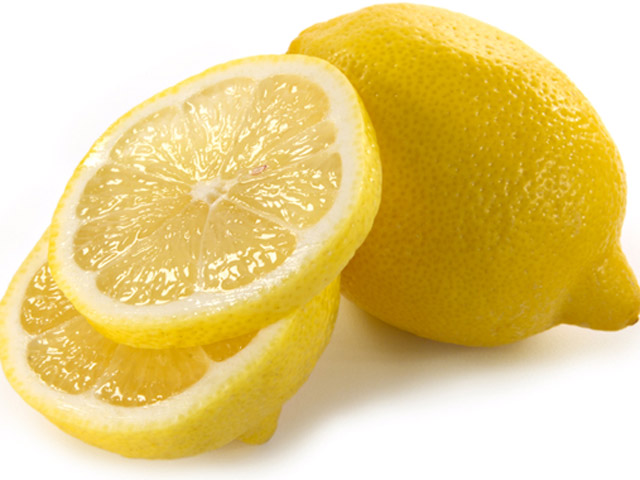
Lemon and its benefits


Lemons are highly antibacterial. Lemons are antiseptic. Lemons are simply amazing and can do wonders for your health. -  Lemons are rich in vitamin C, calcium, potassium and magnesium.

Lemon to Treat Colds and the Flu

When suffering from a cold, lemons are essential. Lemons strengthen your immune system.  Lemon combined with honey is a well known remedy. Add a few tablespoons of fresh lemon juice and a teaspoon of honey to a cup of boiling water.
You can also try a mixture of juice from one lemon, hot water, a couple tablespoons of honey. Add a half inch piece of cinnamon or a few cloves. Drink a glass every 3-4 hours.

Lemons on Insect Bites and Poison Ivy Burns

If you have been bitten by mosquitoes or fleas, be sure to dab some lemon juice directly on the area of the skin that has been bitten. This is a wonderful natural remedy and will help ease the itching and swelling caused by the insect bite.
Lemons also work wonders on poison ivy burns. Your skin will heal faster if you rub slices of lemons on the rash. Continue using lemons on your on infected skin until it as good as new.

Lemons to Prevent Memory Loss

Tests have newly been done on mice concerning lemons and memory. It showed that lemons have a positive effect to prevent memory loss. Lemons should be part of your daily diet.

Lemons and Stress

Lemons are known to help reduce stress. People who are suffering stress will benefit from a larger intake of vitamin C. Drinking a glass of lemon water daily when you get up in the morning should be an advantage. Drinking tea with lemon before you go sleep will also help to relax.

Lemons to Reduce Cholesterol

Studies have proven that one way of reducing cholesterol is to consume lemons as pectin and vitamin C lowers the level of cholesterol. Lemons contain both pectin and vitamin C. By including a lemon and lemon zest in your daily diet, the cholesterol level will be reduced. Please also consult with your doctor.

Lemons and Kidney Stones

Drink a glass of water containing a teaspoon of lemon juice daily. This will help prevent kidney stones. Drinking lemon water will also assist the curing of the most common kidney stones.
Source: lemonmania

13 products for healthy blood vessels


The blood vessels are the part of the circulatory system that transports blood throughout the body. There are three major types of blood vessels: the arteries, which carry the blood away from the heart; the capillaries, which enable the actual exchange of water and chemicals between the blood and the tissues; and the veins, which carry blood from the capillaries back toward the heart.

The following products which helps us to keep healthy blood vessels are:

Wholegrains
Fiber (fiber), which contains the whole grain (whole wheat bread, brown rice, oats and buckwheat groats, etc.). Fraps excess cholesterol and removes from the body.

Salmon (or other fatty fish)
Oily fish such as mackerel, herring, tuna and salmon contain omega-3 fatty acids. Eating oily fish twice a week reduces the risk of heart disease, reduces inflammation and improves cholesterol metabolism.

Asparagus
Asparagus is one of the best natural purifiers of the arteries - it contains lots of folate, which are treated with long-standing inflammation of blood vessels and reduce blood pressure. Therefore, asparagus is a natural medicine that prevents blood clots.
Note: to cook the asparagus just need a couple of minutes in salted water, then drizzle with a creamy melted butter or olive oil. Serve as a side dish.

Garnet
Pomegranate contains many phytochemicals that protect the mucous membranes of the arteries from the inflammation and damage. Pomegranate juice stimulates the body's nitric oxide, which dilates blood vessels and improves blood flow in vessels.
Note: Do not drink the juice from the store. Either eat fresh pomegranates with seeds, and squeeze the juice and divorce with clean water in a ratio of 1:1.

Broccoli
Broccoli is rich in vitamin K, which is essential for strong bones and prevent calcium deposits in plaques of cholesterol and damage arteries.
In addition, a lot of fiber in the broccoli, which normalizes blood pressure and cholesterol levels. Used the broccoli in soups and as garnish. And the more the better.
Note: to save all the valuable material, lay the cabbage in boiling water, add salt and a lid cook on low heat for 3-5 minutes. Properly cooked cabbage should be slightly crisp. Eat it should be immediately watered milk sauce.

Turmeric
Spice turmeric has a very strong anti-inflammatory effect, since it contains curcumin. Inflammation is a major cause of atherosclerosis and subsequent hardening of the arteries. Curcumin also helps to reduce fatty deposits in arteries by as much as 26%.
Note: add turmeric to all first and second courses, as well as in the warm milk that you drink before bedtime.

Persimmon
Studies show - polyphenols, which are many in this fruit (persimmon sodderzhit twice as much fiber and more antioxidants than apples) can reduce the buildup of cholesterol on the inner walls of blood vessels.

Spirulina
Every day, 4,500 mg of blue-green algae (usually in the form of ready tablets or powder), remove the chronic spasm of the artery walls, normalize blood pressure and help the liver to produce good cholesterol, which slows down the development of atherosclerosis.

Cranberries
Research shows that cranberries rich in potassium may help lower bad cholesterol, and regular consumption of acidic fruits can help reduce the overall risk of cardiovascular disease by as much as 40%!

Coffee
According to researchers at Harvard University and the University of the Netherlands, people who drank more than two but not more than four cups of coffee a day for 13 years, had almost 20% lower risk of cardiovascular disease than people who consumed the drink only occasionally from time to time.
But the master key for obtaining the health benefits of coffee should be in moderation. Caffeine is a stimulant that can cause a temporary rise in blood pressure, which is normal after a while, but in excess, can lead to cardiac arrhythmia.

Green tea
Green tea is rich in catechins, compounds that reduce the absorption of cholesterol and help prevent cancer and prevent weight gain.

Spinach
Potassium and folic acid contained in spinach, help to lower blood pressure, and, according to recent studies, one serving of spinach a day can help reduce the risk of heart disease by 11%.
Note: In the winter, fresh spinach may be replaced by ice cream and add it to omelets, salads, pasta.

Cheese
Cheese helps to lower blood pressure. A recent study Women's Hospital and Harvard Briha School of Public Health, people who eat three servings daily low-fat dairy products have lower systolic blood pressure than those who eat less milk.
Note: in our stores is likely to find the cheese and low fat feta cheese (19-22-25%) of foreign manufacture (Polish for instance).